
A broken shaft costing hundreds of thousands, a recurring manufacturing defect, or product development for which a small business lacks its own laboratory. For entrepreneurs, this is everyday reality; for scientists at CXI TUL, it is a challenge they know how to tackle. This autumn, the SUPPORT4SME project set out directly to visit businesses, from Liberec via Sokolov to Saxony. And it demonstrates that cutting-edge research need not be the preserve of major industrial players.
September, October and November at CXI TUL were devoted to intensive collaboration between research and industry. The SUPPORT4SME project, jointly run by CXI TUL and Chemnitz University of Technology, was presented at several business and specialist events in the Czech Republic and Germany. The aim was to raise awareness of the project amongst other companies that had not yet heard of it, and to show them how they can utilise specialist knowledge, technology and laboratory facilities to solve specific problems.
Across the Czech-Saxon region
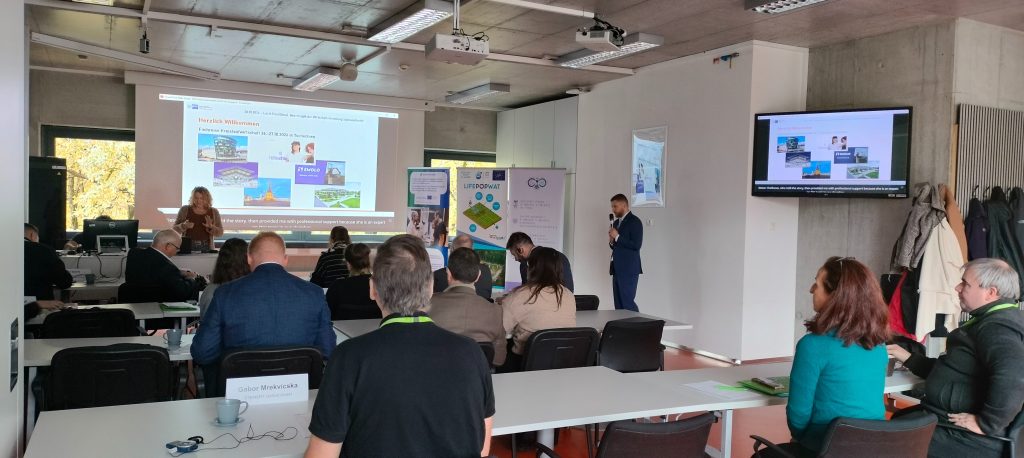
The autumn series kicked off on 16 September at the Business Support Fair at Lipo.ink in Liberec, where we introduced entrepreneurs to the possibilities of laboratory analyses, materials testing and technological development. The very next day, our Saxon partners presented the project at the event ‘Towards the 2026 Target through the Circular Economy’ in Dresden.
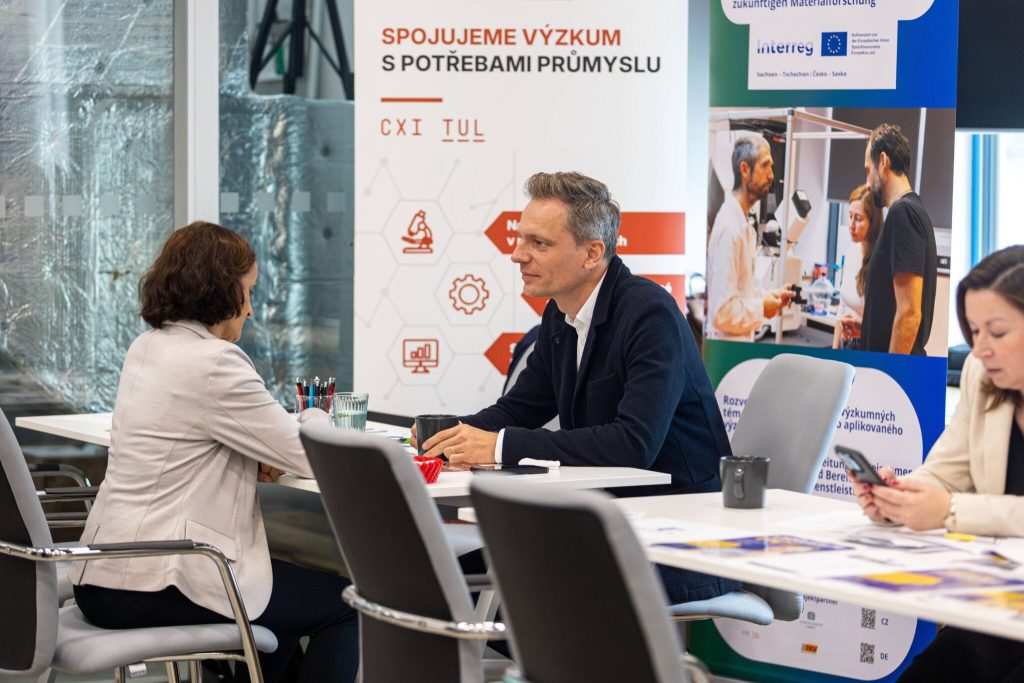
Czech-Saxon workshop: Plastics processing and chemical analysis
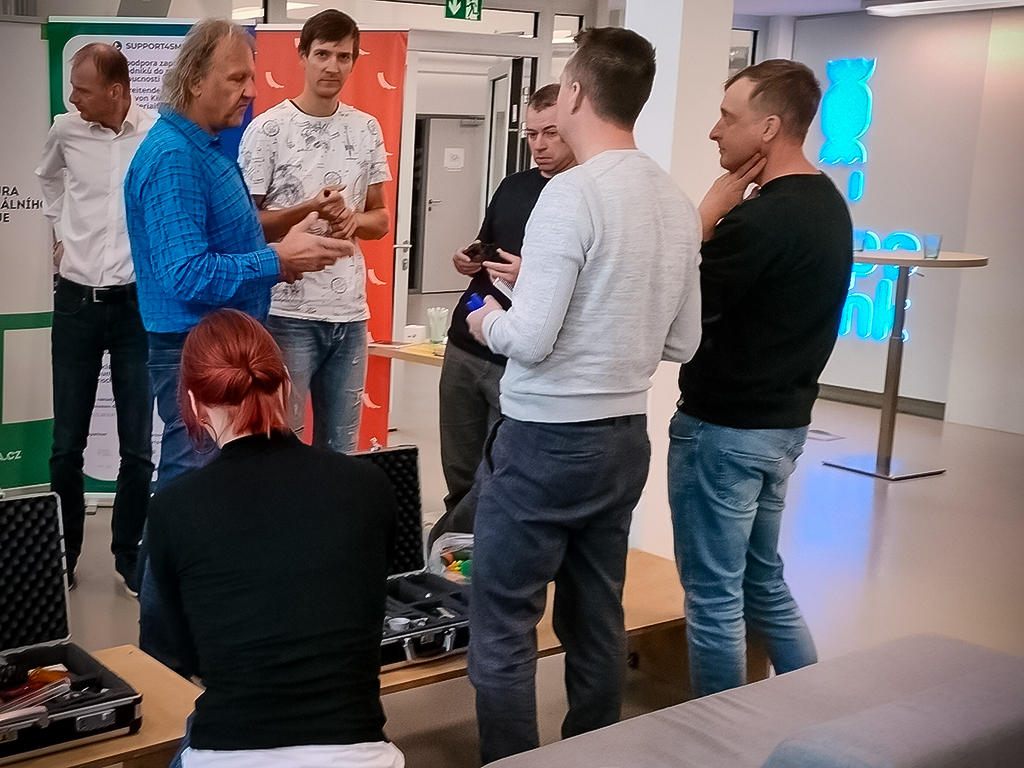
In October, activities moved to the Karlovy Vary Region. The Czech-Saxon workshop in Sokolov on 7 October brought together businesses with experts from CXI TUL and TU Chemnitz. Adam Blažek and Kristina Roder demonstrated how research can assist in the development of new products, material analysis and the resolution of manufacturing defects.
And the companies certainly didn’t come just to listen. They were interested in plastic injection moulding, the selection of suitable materials and opportunities for specialist training. Discussions also covered sheet metal forming and computer simulations capable of predicting material behaviour even before production begins. Further questions focused on the automation of production and packaging processes, chemical analyses of extracts from mushrooms and herbs, and the use of TUL’s state-of-the-art CXI microscopy equipment. There was also interest in plastics processing technologies for the automotive and food industries.
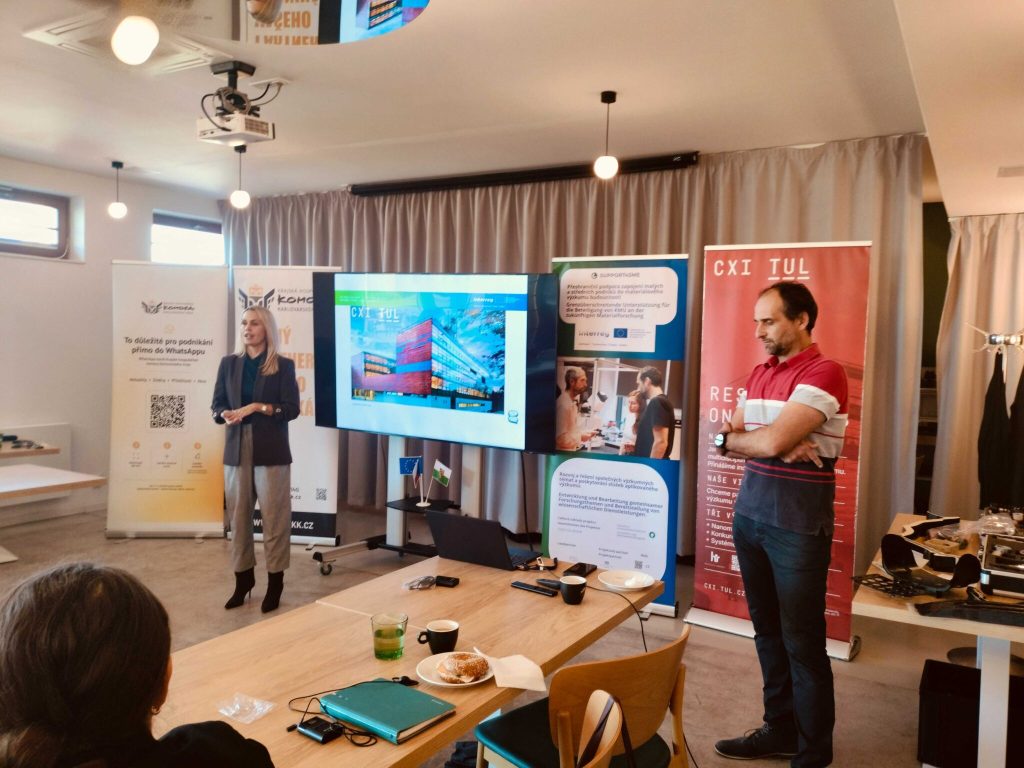
Business Breakfast: The University as a Partner for Businesses
On 15 October, we returned to Lipo.ink for a Business Breakfast. Our aim is to show businesses that the university is not a closed world of laboratories, but a partner they can turn to with a specific problem. Lukáš Slovák from Softli confirmed that collaboration works in practice, sharing his own experiences with CXI TUL with the entrepreneurs.
Circular economy: Czech and Saxon companies visit the CXI TUL laboratories
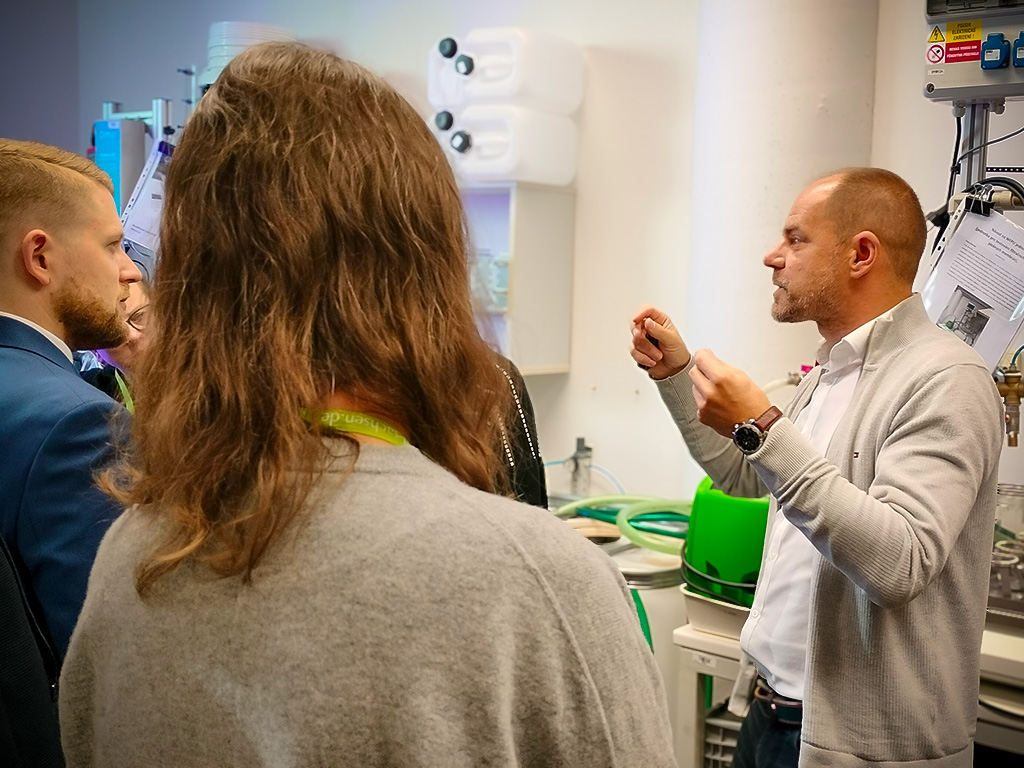
On 26 October, we welcomed companies directly to our premises at CXI TUL. As part of an international fact-finding mission focused on the circular economy, organised by Wirtschaftsförderung Sachsen and Energy Saxony, representatives of Czech and Saxon companies, research institutions and the Fraunhofer Institute met in Liberec.
We presented our research activities and the cross-border projects SUPPORT4SME and TRANSTECH, which link research institutions with industrial practice. Participants also learnt about examples of the application of circular economy principles in industry, opportunities for material recycling and technological innovations.
And it wasn’t just about the presentations. The companies toured the 3D printing laboratories, where we demonstrated the potential for using recycled materials in additive manufacturing, as well as laboratories specialising in water treatment technologies. An important part of the meeting was the one-to-one discussions, during which opportunities for further cross-border cooperation were explored.
Collaboration starts with the younger generation
November brought another cross-border meeting. At the Strengths Forum in Löbau, Germany, on 4 November, we introduced young people to the world of research and technology. The event brought together Czech and German students, companies and research institutions, and served as a reminder that future collaboration between industry and science also begins with the education of the next generation.
A broken shaft and a dispute with a supplier
The best argument for collaboration is not presentations. It is the specific problems that companies were unable to solve – and which experts from CXI TUL helped to resolve.
Tembo brand needed to find out why the shaft of a front-end articulated loader had failed. Analyses carried out at CXI TUL confirmed a manufacturing defect in the material. The results formed part of an expert report and provided the company with evidence for a claim and any potential legal proceedings.
Why do cutting tools break?
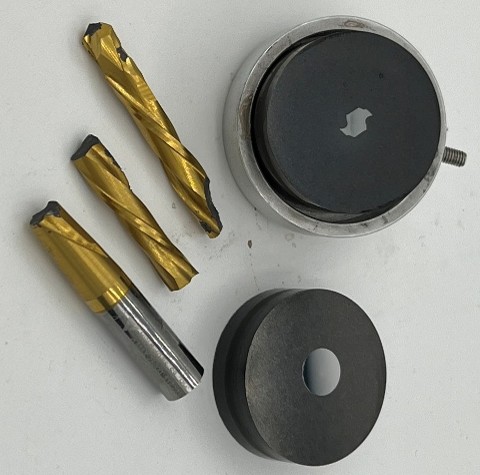
HD Technologies was dealing with the premature breakage of drill bits and milling cutters. Experts determined that the problem was likely not due to the material itself, but to excessively coarse grinding and insufficient cooling. They recommended adjustments to the manufacturing process that could reduce the number of failures and cut costs.
When a small component fails
RETOS VARNSDORF was dealing with a cracked manipulator pin. Fractographic analysis revealed a fatigue fracture caused by repeated stress. The likely cause was an insufficiently tightened joint. The company received recommendations on how to prevent similar failures.
From machinery to cross-country ski waxes
Titan Gliders utilises the CXI TUL laboratories in the development of cross-country skiing waxes. Analyses of its own ingredients and those of competing products help it to develop new formulations in a targeted manner and save time and money on experimentation.
State-of-the-art laboratories for the price of VAT
SUPPORT4SME enables small and medium-sized enterprises from the Liberec, Ústí nad Labem and Karlovy Vary regions, as well as from Saxony, to make use of specialist services, analyses and consultancy on exceptionally favourable terms. Companies that meet the eligibility criteria pay only VAT on the price of the service provided.
The project aims to support more than 130 businesses and demonstrate that collaboration with a university does not have to begin with a multi-million research project. Sometimes a single question is enough: Why isn’t this working for us?
Do you have a similar problem in production, or are you developing a new product? Take a look at the opportunities for collaboration and case studies at www.support4sme.cxi.tul.cz.