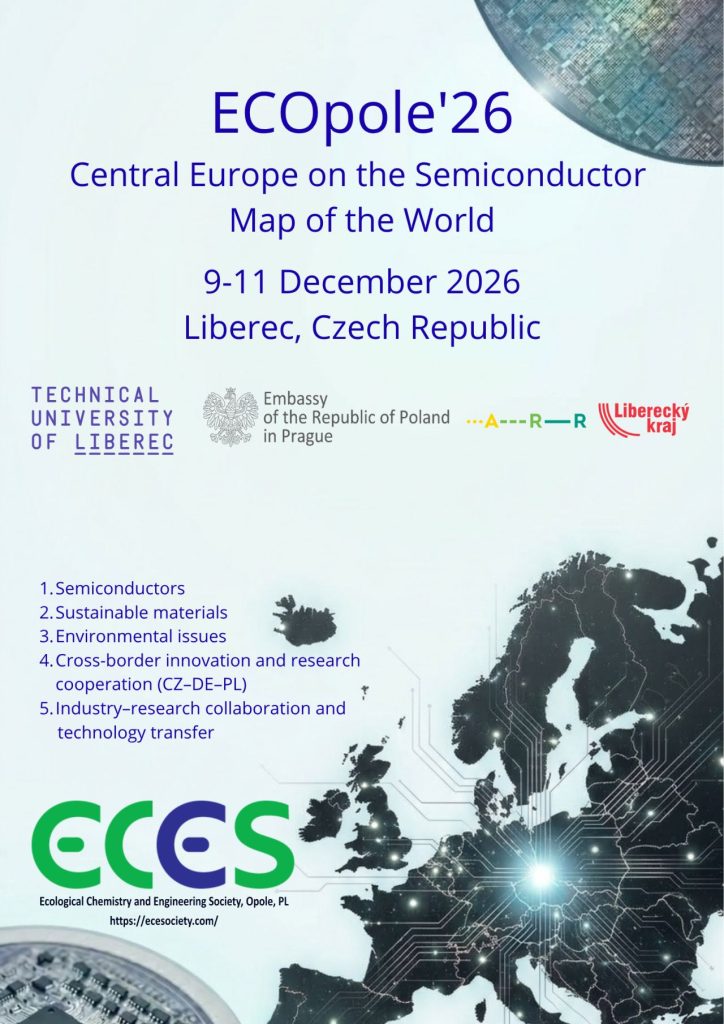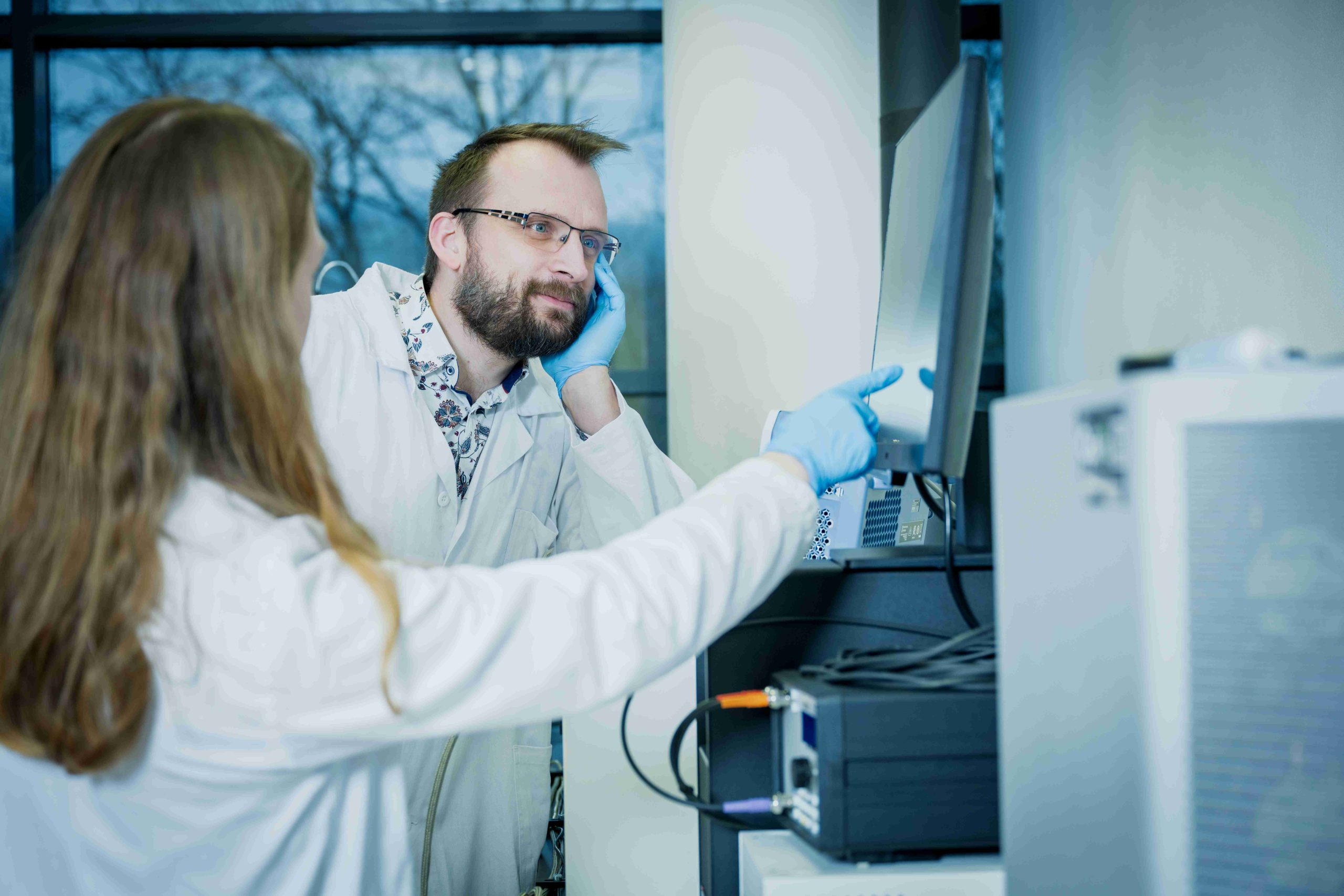
When people hear the term ‘semiconductor industry’, most imagine silicon chips in mobile phones or computers. Few, however, realise that their production requires vast quantities of exceptionally pure water, specialised materials and technologies operating at the atomic level. It is precisely in these areas that researchers from the CXI at the Technical University of Liberec are conducting their research. What role can Liberec play in the European semiconductor industry? And why are experts from research and industry gathering here for the ECOpole international conference? Stanisław Wacławek, head of the Department of Environmental Chemistry at CXI TUL and organiser of the conference, answers these questions. The conference will take place on 9–11 December 2026 in Liberec; registration is open until 15 November.
Your research has long focused on environmental chemistry, catalysis and water treatment technologies. How did semiconductors come to be part of this research journey, and what interests you most about them today?
To be honest, I didn’t get into semiconductors via chips. I got into them via water. For years, my group has been working on oxidation and reduction processes – that is, using highly reactive particles, such as sulphate radicals or hydrated electrons, to break down substances that are resistant to decomposition, such as PFAS. And semiconductors are one of the best ways to generate these highly reactive particles. For example, titanium dioxide nanoparticles can harness light energy to trigger chemical reactions that break down even highly resistant substances. So we were using semiconductors in our laboratory long before we started referring to our work as semiconductor research.
What fascinates me most today is that we keep coming up against the same question everywhere: where does the electron go, and how fast? In a photocatalyst, in water, in a chip. We try to track it directly using lasers and calculate its behaviour using quantum chemistry. And then I’m also interested in the other side of the whole sector. Chip manufacturing requires huge quantities of ultra-pure water and some very persistent chemicals. And that’s exactly my field.
People see the phone. They don’t see the chemists and analysts behind it
When people hear the word ‘semiconductor’, they usually picture chips in phones or computers. What scientific questions need to be resolved before such technologies can even be developed?
The chip is the final step in a very long chain, and almost every link in that chain is related to chemistry and materials science. You need silicon and other materials of almost absurd purity, because even a few stray atoms can destroy a transistor. You need to understand surfaces at the level of individual atoms, develop precise procedures for cleaning them, and use water so pure that it practically does not occur in nature – and after use, you must purify it again.
Each of these things is a scientific question before it becomes an engineering one. How does a defect arise? How does a molecule bind to a surface? How do you even measure something that makes up a trillionth of a sample? People see the mobile phone. They don’t see the chemists and analysts behind it.
What questions relating to semiconductors are you currently focusing on in Liberec, and where do you see the greatest potential for further development?
There are several groups at CXI TUL working directly on semiconductors. Our team collaborates with them and contributes primarily in three areas.
The first is water and its treatment. We are developing processes capable of breaking down persistent pollutants, such as PFAS or organic residues. Similar processes are also important in the production and reuse of ultrapure water, which is essential for chip manufacturing. For example, we are working on the chemistry of persulphates and hold a patent for a simple method of determining their concentration.
The second area is new materials. Using a laser, we produce nanoparticles directly in a liquid without adding any further chemicals. We also prepare graphene and graphene oxide, whose electronic properties we can influence during their electrochemical synthesis by adjusting the voltage. We subsequently test these materials, for example, for water purification, where they can break down pollutants using light or bind unwanted substances to themselves.
The third area is quantum chemical calculations and trace analysis. We investigate electron transfer between molecules and, in our accredited laboratory, we also measure extremely low concentrations of chemical substances.
I see the greatest potential in the reuse of water in chip manufacturing and in the development of technologies that actually break down PFAS, rather than merely trapping them and moving them elsewhere.
You are also involved in water treatment as part of the HYDROCHEMIST project, where you are investigating highly reactive electrons capable of breaking down even very persistent chemicals. What does the support from the ERC CZ programme enable you to do, and why is it important to fund research whose results cannot be guaranteed in advance?
ERC CZ supports projects that were successful in the European Research Council’s evaluation process but narrowly missed out on funding. Our HYDROCHEMIST project focuses on hydrated electrons – essentially, free electrons in water. They usually exist for only microseconds, but they are capable of breaking even very strong chemical bonds, such as the carbon–fluorine bond in PFAS.
Such support gives us something precious: the time and freedom to focus on one difficult question rather than ten small ones. It has enabled us to assemble a team of experimental chemists, laser experts, analysts and specialists in quantum chemistry. It has also allowed us to take more risks and tackle questions where the outcome is not certain in advance.
In my view, ERC CZ is a truly brilliant idea and an important bridge back to the European Research Council (ERC) grants. It has personally motivated me to submit an application again.
Liberec need not compete with Dresden
People often associate the semiconductor industry with major technology hubs in Asia or the United States. Why does it make sense to strengthen semiconductor research in Central Europe – and specifically in Liberec?
Because chips aren’t just made in factories. Such a factory is at the centre of a vast network of suppliers: materials, chemicals, gases, machinery, water treatment, analytics, software and, above all, people. With the Chips Act, Europe has decided it does not want to be entirely dependent on Asia and the US, and that network needs to be built somewhere.
Take a look at the map. Dresden, together with Silicon Saxony, is the largest microelectronics cluster in Europe, and TSMC is building its first European factory there. Dresden is roughly the same distance from Liberec as it is from Prague. On the other side, we have Lower Silesia and Polish universities, which are strong in materials and chemistry. Liberec does not need to compete with Dresden. It can be the neighbouring location that supplies know-how, technology, services and graduates. And this region has a long industrial tradition; people here know how to manufacture things with precision. That’s not a bad starting point.
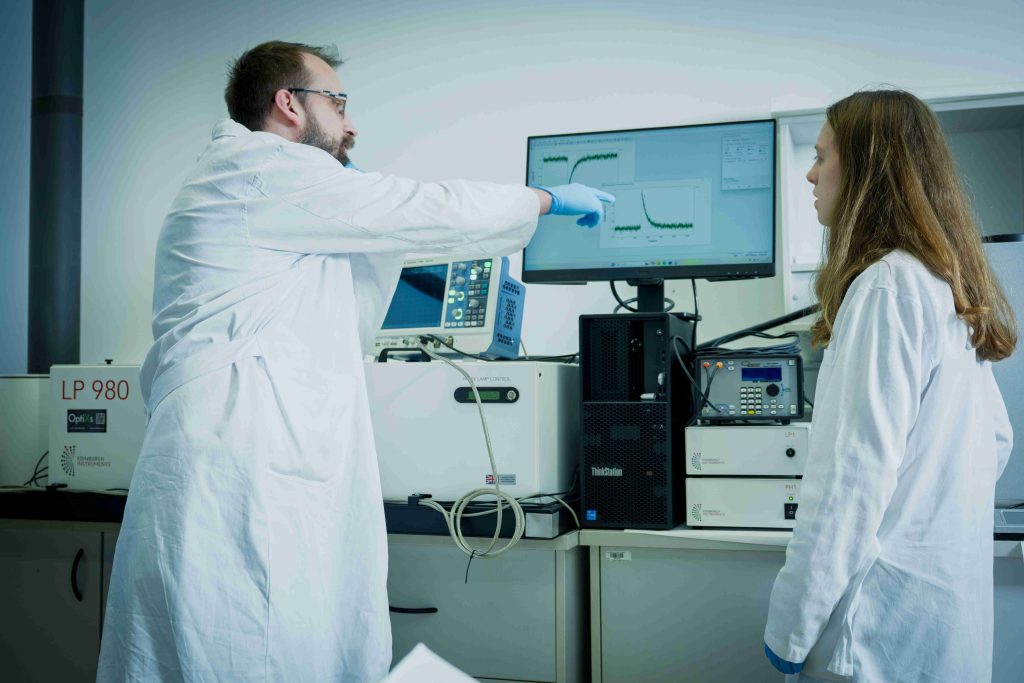
Liberec brings together engineering, materials research, nanotechnology, chemistry and strong cross-border links with Germany and Poland. Is this combination one of the reasons why a distinctive semiconductor ecosystem could emerge here?
I think so, and I’d add glass and crystals, which have a long tradition in this region. A semiconductor ecosystem isn’t just one big factory. It’s precision engineering, pure materials, filtration, chemistry, analytics and people who can communicate across disciplines. Liberec has many of these components: mechanical engineering and textile engineering, nanofibres (needle-free electrostatic spinning was developed right here at TUL), materials research, nanotechnology and chemistry – all within a single university and within a few kilometres.
For me, the cross-border dimension is not just a slogan. I live on the Polish side, a short distance from where three countries meet, and I commute across the border to work every day. Our department collaborates constantly with German partners, for example in Zittau/Zhořelec and Darmstadt, as well as with Polish universities and the Polish Academy of Sciences. When you can bring together a Czech, German and Polish partner at the same table within an hour , that’s a real advantage. The challenge is to link these pieces together in a targeted way, not just hope that it will happen by itself.
Come for three days and you’ll meet more of the right people than you would in a month of emailing
This year’s ECOpole conference places greater emphasis on semiconductors, alongside environmental technologies and cross-border innovation. Why did you decide to steer the conference in this direction, and who would you most like to bring together in Liberec?
ECOpole has a history spanning more than thirty years in environmental chemistry and engineering, and over the years it has hosted Nobel laureates such as Gerhard Ertl, who won the prize for chemistry on solid surfaces, and computational chemist Arieh Warshel. Last year, the conference came to Liberec, and this year we wanted to give it a clearer local focus. Semiconductors were a natural choice. And it’s actually a return to our roots: ECOpole was founded in 1992 in Opole as a conference on environmental monitoring, and the early editions featured papers on semiconductor gas sensors. The region is seriously addressing its place within the semiconductor ecosystem, and if you look at what this industry needs – ultra-pure water, wastewater recycling, getting rid of PFAS, cleaner chemistry, energy – it’s environmental chemistry from start to finish. Yet the people who manage water systems in semiconductor factories and those who develop new purification methods rarely meet.
So who would I like to see in Liberec? Engineers from industry who face specific problems, researchers who can offer solutions, people involved in regional development who can bring them together, as well as young scientists and students. It is precisely the opportunity to meet in person, exchange experiences and find partners for joint research that I consider to be ECOpole’s greatest benefit. When two people meet over a coffee and start a project together, the conference has served its purpose.
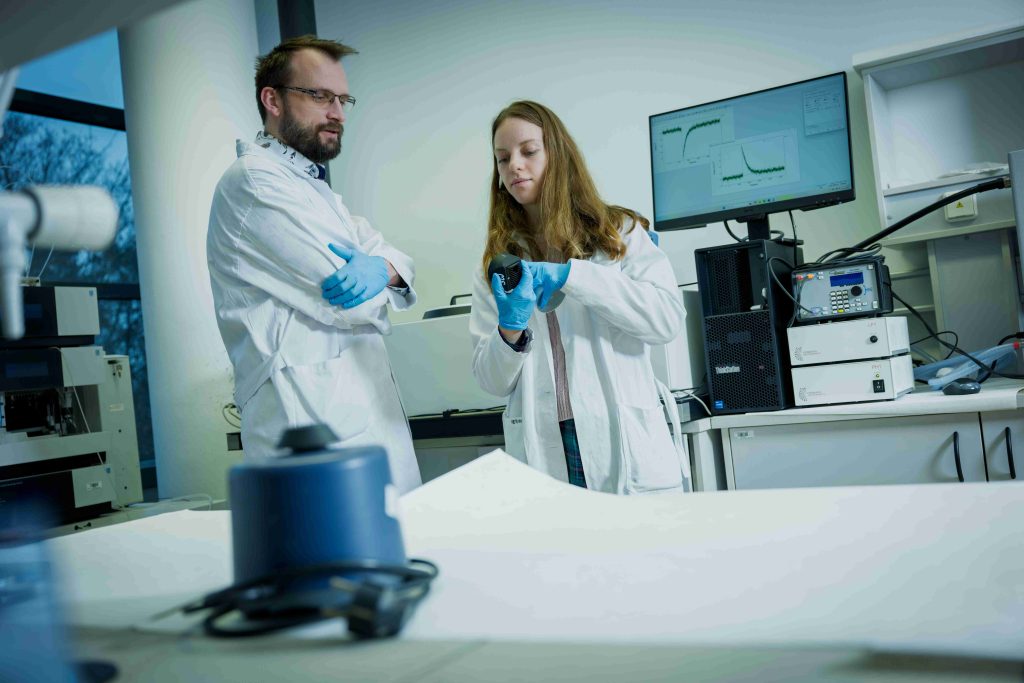
Sustainability is an increasingly important issue in semiconductor technologies. Where do you see the main environmental challenges today, and how can research help make semiconductor manufacturing more sustainable?
I see three main challenges: water, chemicals and energy. A large chip factory can consume as much water as a small town. Moreover, the water must be ultra-pure, which in itself requires energy and chemicals. The manufacturing process also produces wastewater containing fluorides, metals, solvents or highly persistent PFAS substances. Fluorinated gases used in production also pose a problem, as they are potent greenhouse gases.
Research can help, above all, with water reuse and the development of technologies that actually break down these problematic substances, rather than merely trapping them. This is precisely what we are working on – using hydrated electrons and persulphates. Equally important is the accurate measurement of pollution and the search for safer alternatives to the chemicals currently in use. After all, you cannot manage what you cannot measure.
If you wanted to convince a researcher or a company representative who had never considered Liberec as a location for semiconductor research – why should they come to ECOpole, and what should they take away from their visit to Liberec when they leave?
I’d say to them: come for three days and you’ll meet more of the right people than you would in a month of emailing. ECOpole is big enough to be interesting, but small enough for you to actually speak to everyone, including the speakers. In one place, you’ll meet researchers and companies from the Czech Republic, Germany and Poland, and Dresden, Prague and Wrocław are all easily accessible from here.
I’d like people to remember Liberec not only as a beautiful city at the foot of Ještěd, but also as a place where cutting-edge research is carried out in the fields of chemistry, materials science and nanotechnology. We have modern laboratories, equipment and people here who want to put their knowledge into practice and find solutions to real-world industrial problems.
And I hope they’ll also remember Liberec as a place where new collaborations are born from conversations between conference participants. There’ll be an opportunity for this on 9–11 December at ECOpole. Registration is open until 15 November. If Ještěd is covered in snow in December, that’ll be a lovely bonus.