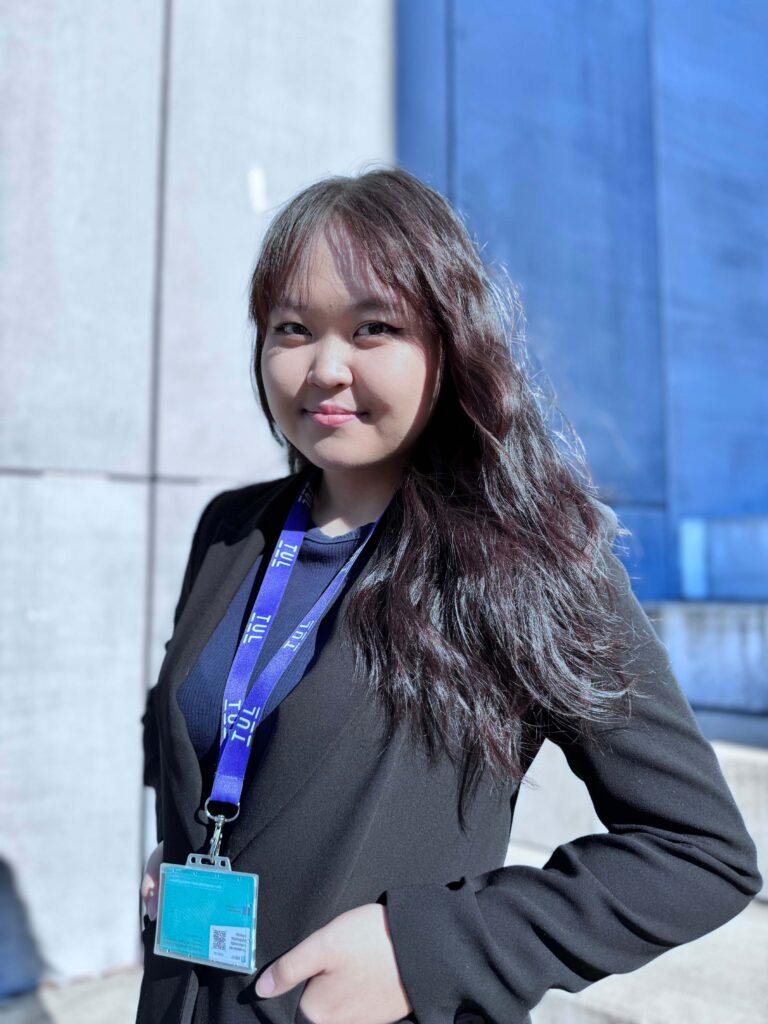
Misheel Gantsogt studied Nano Science and Engineering at the National University of Mongolia. Her journey to CXI TUL began with a Czech government scholarship and a connection between her professor Dr. Ganzorig and CXI TUL Director Professor Miroslav Černík.
She came to Liberec to study, research and gain new experience. This autumn, she will continue her studies at CXI TUL after being accepted into the follow-up master’s programme in Bioengineering.
In this interview, she talks about what it was like to come from Mongolia to the Czech Republic, what brought her to nanoscience and why she decided to continue at CXI TUL.
What motivated you to come to Liberec for your internship?
Initially, I wasn’t very interested (I’m still not sure why!), but I remember a turning point during the Lunar New Year. While we were making dumplings, I mentioned the scholarship to my family, saying I’d rather graduate first. My uncle and his wife, both Charles University alumni, were shocked! They said, „Are you crazy? You must apply! It’s a beautiful country.“ That sparked my interest. I had two options, including Prague, but after watching some videos, I fell in love with Liberec’s nature and its peaceful atmosphere. Most importantly, CXI TUL is the perfect place for my major, so everything just fell into place.
What did you work on during your internship at CXI?
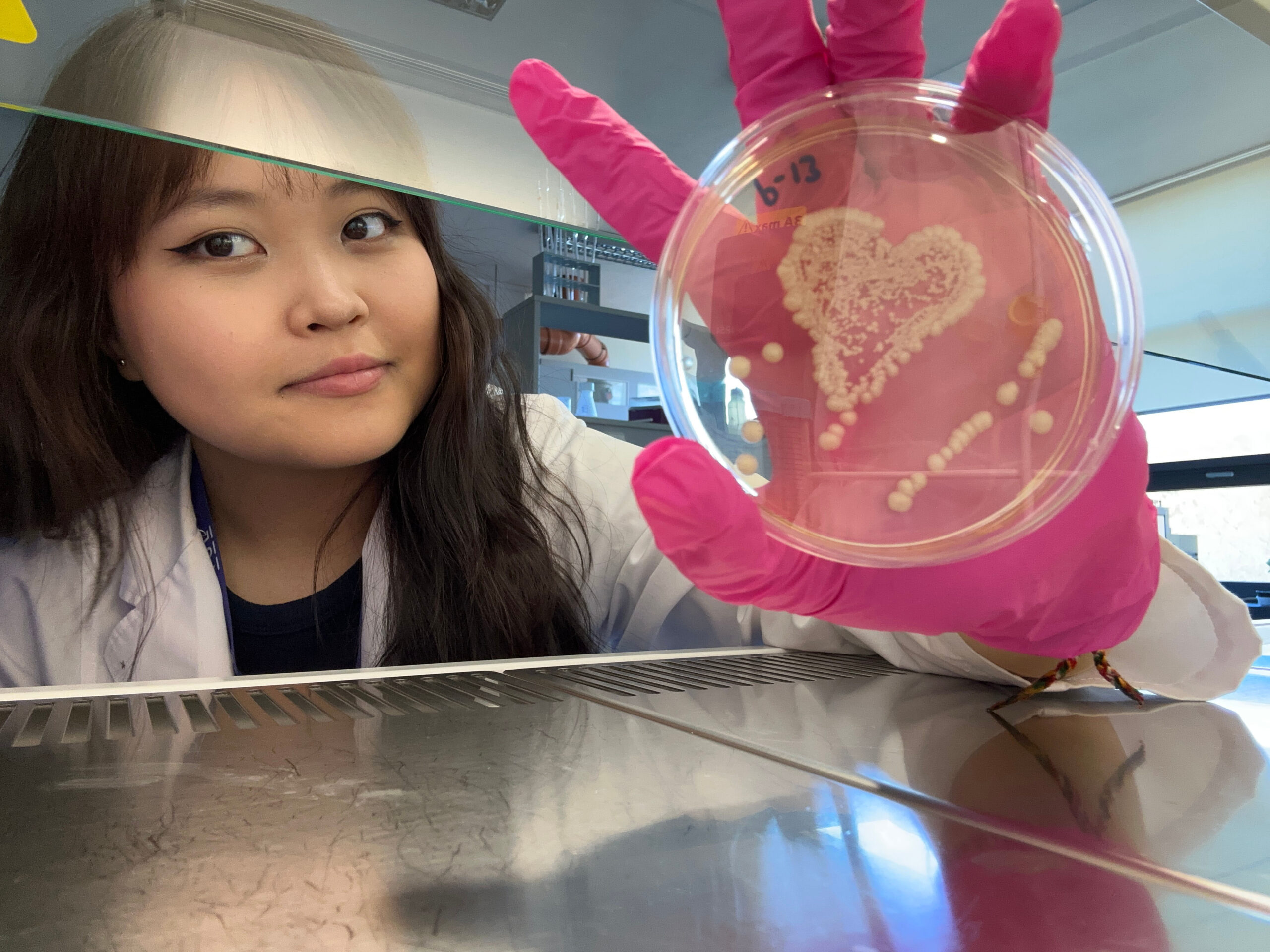
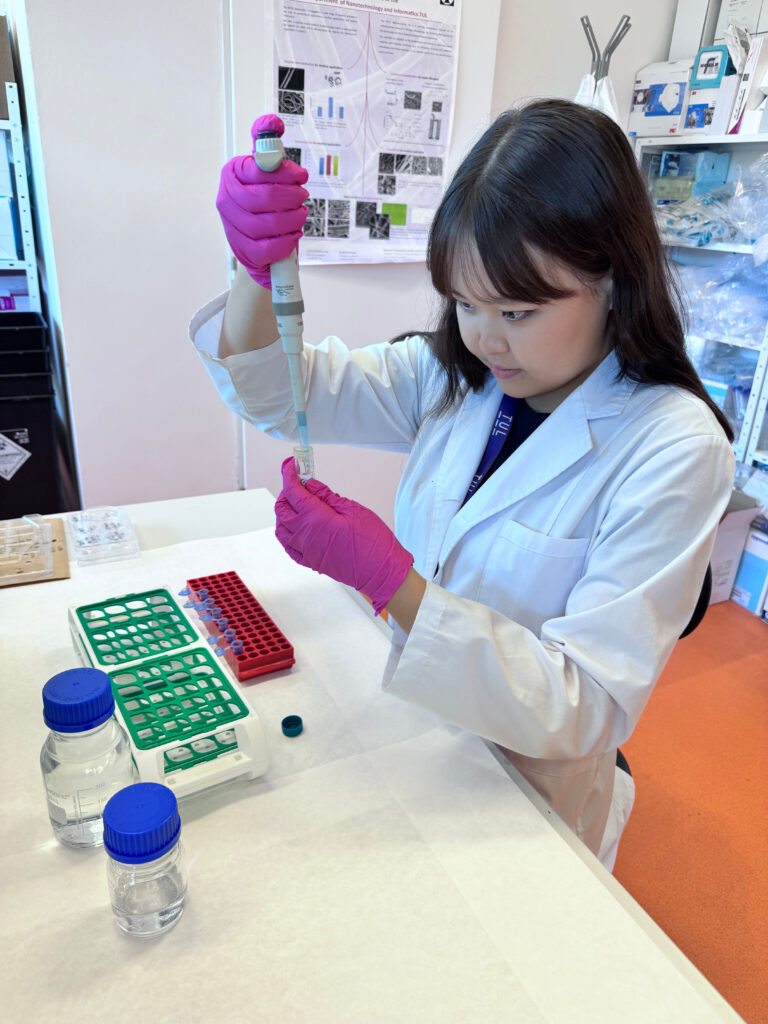
I worked under the supervision of Karolína Moravková, focusing on clotrimazole-loaded nanofibers. Most of my time was spent in the wet lab, specifically in the microbiology department, where Candida albicans became my daily research ‚friend.
I am incredibly grateful to my supervisor, Karolína. Thanks to her guidance, I have gained numerous laboratory skills and learned so much. She is truly amazing, always teaching me everything with such patience and kindness. Furthermore, I had the opportunity to learn from other experts like Hana Tománková and Miroslava Rysová, which expanded my knowledge even further.
What would you tell your grandmother if she asked: „So, what exactly were you doing in the Czech Republic?
We actually had this conversation! I told her I work with bacteria and fungi to create new types of medicine. It’s the simplest way to explain it to her. Of course, she immediately thought about „zombie viruses“ or deadly bacteria, which was quite funny! Since my whole family has a background in science, she understands that I’m busy with „laboratory stuff,“ even if the details are a bit mysterious to her.
What did you find most interesting about CXI TUL’s research directions, and why?
What impressed me most is the seamless collaboration between different fields at CXI TUL. Even though my research is focused on biology, there are always experts available who can explain the chemical or material science aspects of my work in great detail. Working in an environment with top-tier professionals from various disciplines makes every day interesting. Whenever I encounter a concept I don’t fully understand, I can simply ask a specialist, and they explain it in a way that is incredibly clear and easy to grasp.
This cross-disciplinary synergy left a deep impression on me. In Mongolia, I’ve sometimes noticed a quiet competition where different scientific fields or institutes operate in silos, often trying to outperform one another. However, here at CXI TUL, it feels like all branches of science are united under a single goal. Seeing biology, chemistry, and engineering converge so effectively is truly inspiring.
How was your experience working with the research team at CXI TUL? Did you learn something you’ll take with you not only as a scientist, but also as a person?
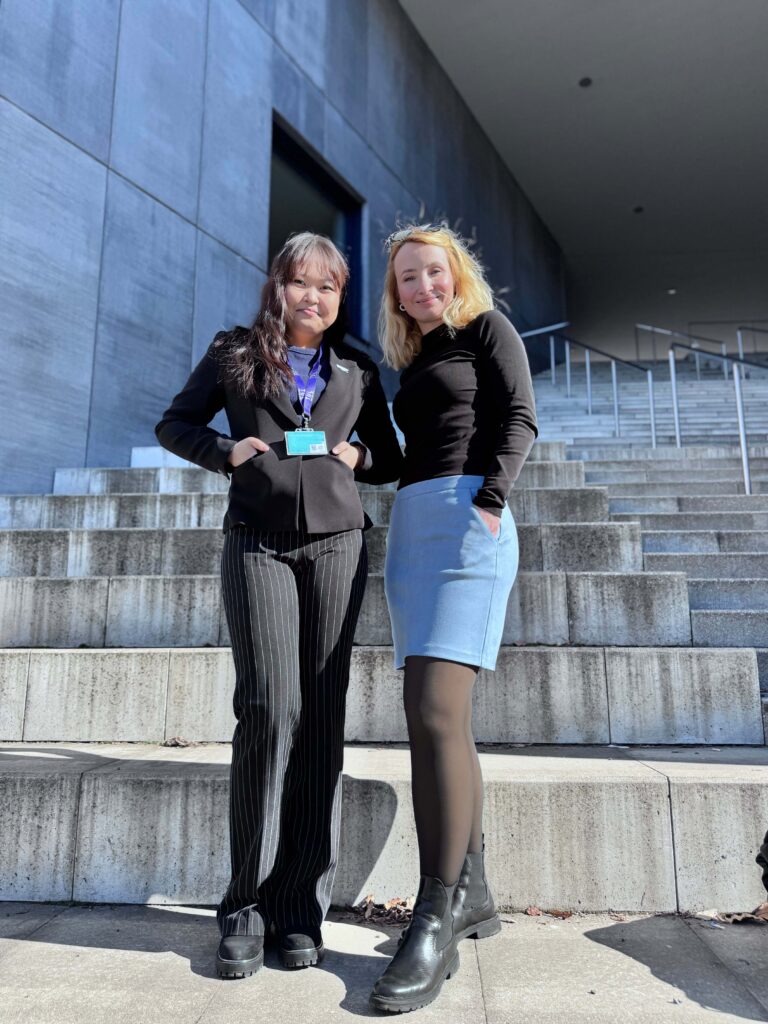
Working with the team at CXI TUL has been an unforgettable experience. Honestly, they felt more like my own sisters than just colleagues. Since this was my first time being away from home for such a long period, I arrived with quite a bit of fear. However, their warmth made me feel so comfortable that it was like being at home.
They guided me through everything…from opening a bank account and navigating the train system to planning travels. Beyond work, I was deeply inspired by seeing how these amazing women balance their responsibilities as researchers and mothers while performing excellently in their careers. It gave me so much courage for my own future.
I will always carry their kindness in my heart. The internship didn’t just teach me science; it taught me about kindness, resilience, and the power of a supportive community.
What methods or techniques did you learn or try here, and which ones would you like to improve further?
This internship was a profound technical awakening for me. I moved beyond theoretical models to hands-on mastery of Electrospinning for nanofiber fabrication—a technology that Liberec is world-renowned for. I also gained significant experience in characterization techniques like SEM (Scanning Electron Microscopy), which allowed me to ‚see‘ the science I was creating. On the biological side, working with PCR and microbiology cultivation was eye-opening.
What specific topic would you like to continue with in your future studies here, and what research question or hypothesis would you like to explore?
My academic ambition is to work at the vital intersection of Bioengineering and Clinical Oncology. While my previous work touched on material science, my future goal is to shift toward the biological side—specifically exploring how we can use bioengineered interfaces to revolutionize cancer treatment.
The research question I am most driven to explore is: ‚How can we design biological delivery systems that communicate with the cellular environment to release medication only when they detect cancer cells?‘ My hypothesis is rooted in the idea of precision medicine.
In my future studies, I want to investigate the biocompatibility and cellular response of new drug carriers. I believe that by understanding the ‚dialogue‘ between a synthetic delivery system and a living cell, we can create treatments that are highly effective yet remarkably gentle on the human body. This field is not just about science to me; it’s about using engineering to provide a more dignified and less painful recovery path for cancer patients worldwide.
What surprised you the most during your internship: the Czech lab, Czech coffee, or Czech humor?
To be honest, it was a fascinating mix of all three, but the Czech humor was the biggest revelation. Coming from Mongolia, where laboratory environments are often strictly formal and silent, I was surprised to find that science in Czechia happens in such a relaxed, lighthearted atmosphere.
At first, the dry and slightly sarcastic Czech wit was a bit of a mystery to me! But I quickly realized it’s a sign of a very resilient and grounded culture. It taught me an important lesson: you don’t have to be stern to be a serious scientist. You can discuss complex Bioengineering theories over a cup of Czech coffee, have a laugh, and still achieve incredible results. This balance between high-level professional rigor and a friendly, humorous social life was the most refreshing surprise of my stay.
If you could take one thing home from CXI (besides your research results), what would it be?
If I could pack one intangible thing in my suitcase, it would be the culture of open collaboration. At CXI TUL, I witnessed how different scientific fields—biology, chemistry, and engineering—work together as one united team without the barriers of competition. I want to take this ‚collaborative spirit‘ back to Mongolia to show how much more we can achieve when we bridge different disciplines.
Beyond the mindset, if I could, I would bring the advanced technical infrastructure like the SEM (Scanning Electron Microscopy) and Nanospider technology to Mongolia. My time here has shown me how transformative these tools are for research. I don’t just want this knowledge for myself; I am deeply motivated to help other Mongolian students access these technologies. I want to create a bridge between Liberec and Ulaanbaatar so that future researchers in my country can also experience the thrill of ‚seeing‘ the science they create and use it to solve real-world health challenges.