The vagina, menstruation, the menopause. Three words that can still make an audience feel uncomfortable today. But how are we to advance research into women’s health if we are too shy to talk about it openly? And what if a scientist develops a brilliant piece of technology but is unable to explain its benefits to a company? Or what if a scientist devotes so much energy to communicating science that they end up on the brink of burnout? These were among the questions raised by the SciComHub online conference, which took place on 12 October 2026 at the Technical University of Liberec. Six speakers, six different perspectives and just eight minutes for each presentation.
The SciComHub NETconference followed on from the ‘Share Science!’ conference, organised by the Institute of Nanomaterials, Advanced Technologies and Innovation (CXI TUL), which focused on research communication in regional institutions. The NETconference offered a broader perspective on current science communication and the challenges it faces.
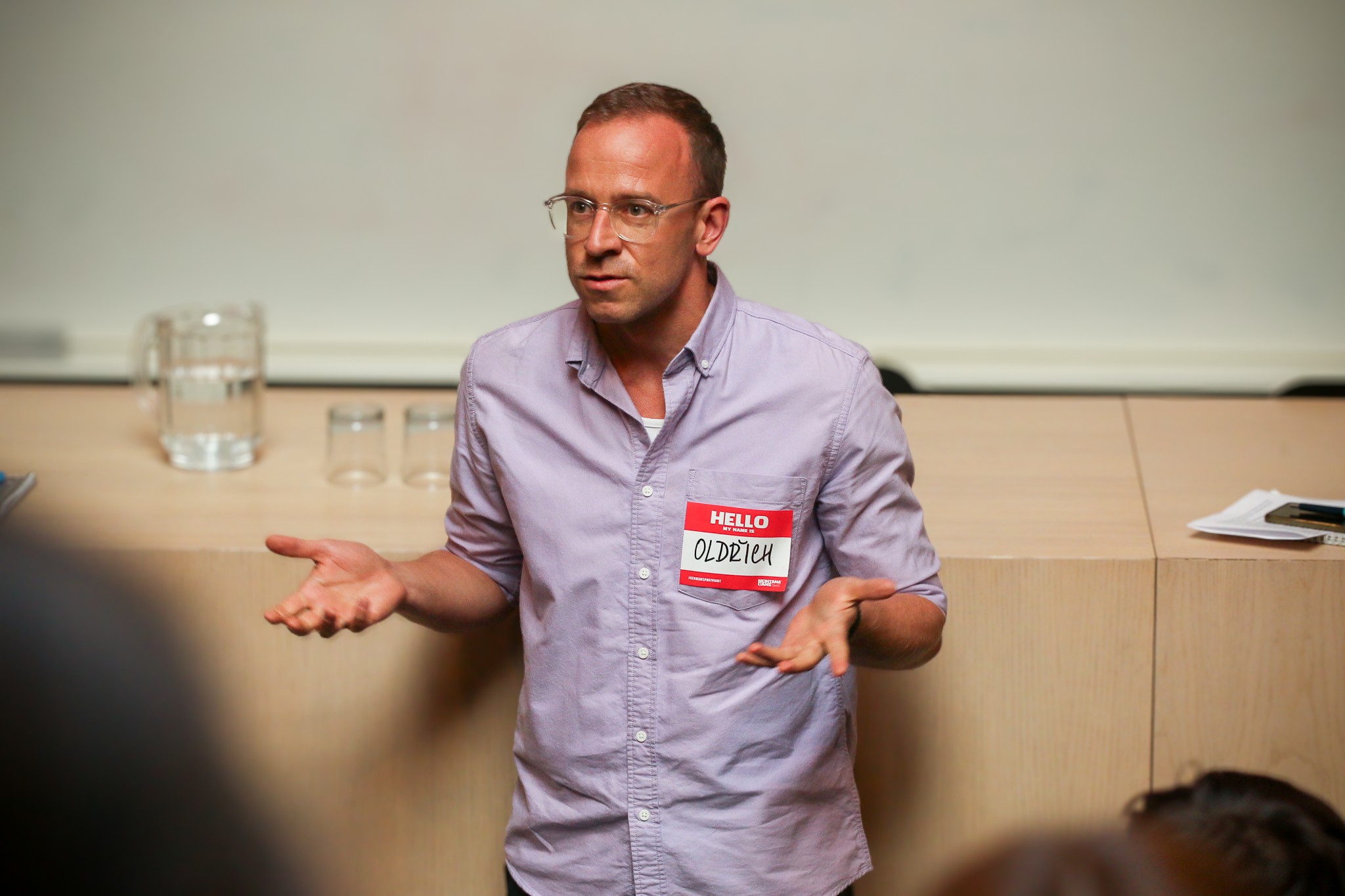
Oldřich Hudeček from the Institute of Organic Chemistry and Biochemistry of the Czech Academy of Sciences hosted the programme. Topics such as the training of science communicators, reproductive health, social entrepreneurship, collaboration with industry and the intersection of science and the arts were covered in quick succession. The closing session focused on the future of the profession itself.
Science and multimedia production
Can one learn to communicate science just as systematically as one learns physics or biology?
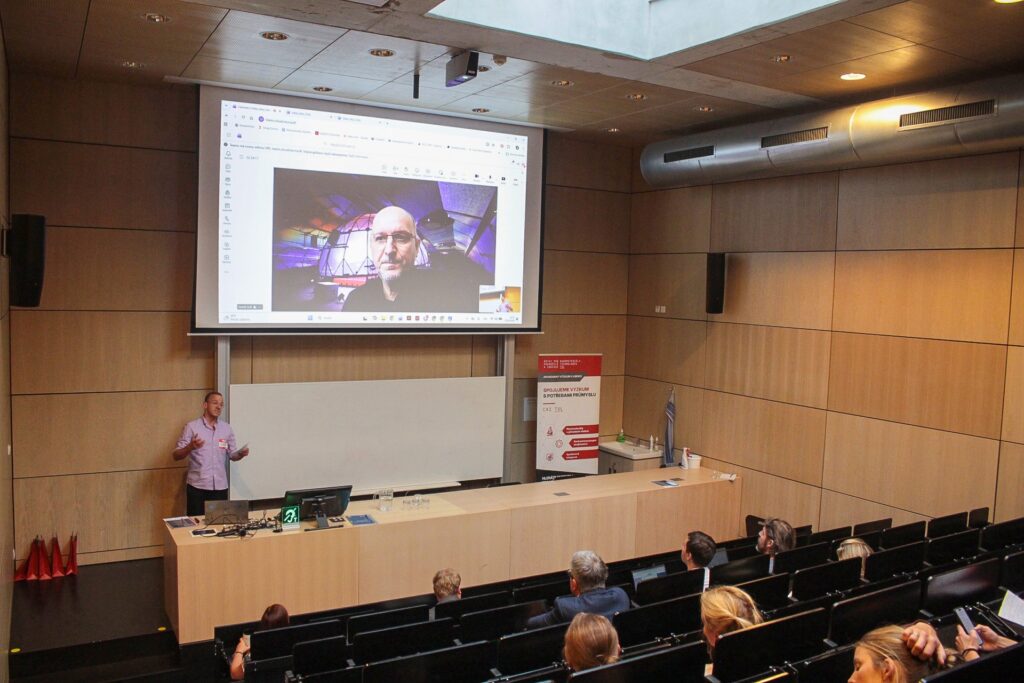
Tomáš Gráf from Silesian University in Opava showed that they can. He presented the ‘Multimedia and Science Communication’ degree programme, which combines specialist knowledge with practical skills in the field of audiovisual production and science communication. Students learn not only to understand specialist topics, but also to talk about them, shoot videos, edit footage and think about how to engage different audience groups.
Using specific student projects, he demonstrated how scientific topics can take the form of documentary films and other multimedia formats.
The popularisation of science, therefore, need not rely solely on scientists who understand their research down to the smallest detail. Equally important are people who can translate specialist knowledge into a comprehensible and engaging story for an audience outside the academic world.
Words that still cause confusion
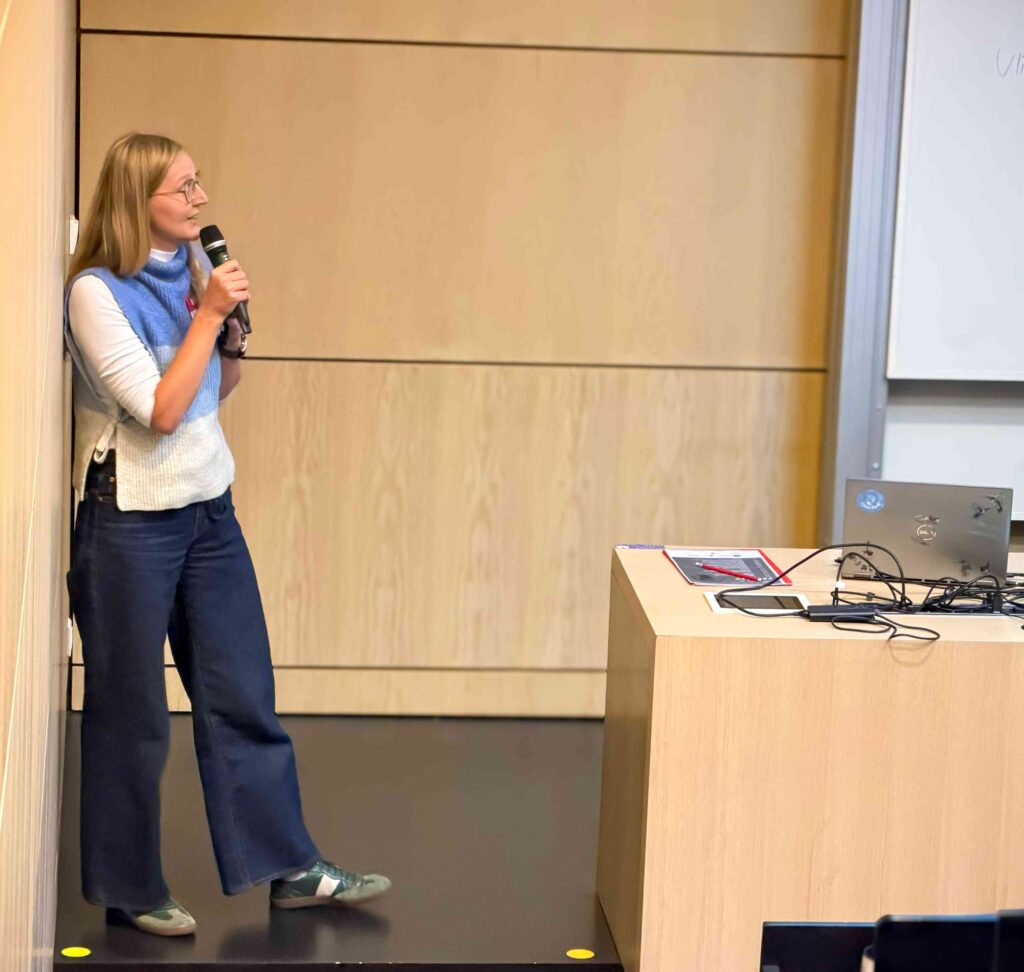
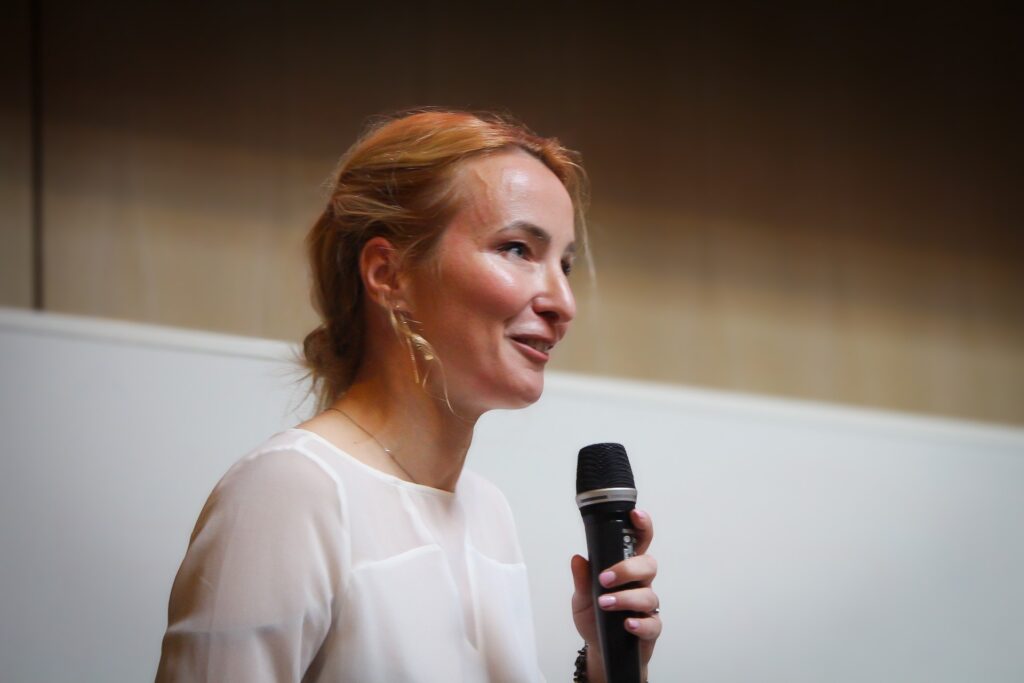
“One of the key aspects of my work is making people feel a bit awkward,” noted Karolína Morávková from CXI TUL right at the start.
And she immediately demonstrated that all it takes is to mention a few common medical terms. Vagina. Menstruation. Menopause.
Although these are a natural part of human life, many people are still reluctant to speak openly about these topics. This makes it all the more difficult to communicate the research that focuses on them. The situation is further complicated by social media, whose rules sometimes restrict even specialist content relating to reproductive health.
“But how can we do better? By calling a spade a spade. By talking about it,” urged Morávková.
Using historical examples, she demonstrated that public pressure from women and female patients in the United States has contributed to changes in their representation in clinical trials and to greater support for research into certain diseases.
At CXI TUL, Morávková conducts research into nanomaterials for gynaecological applications, and she has also demonstrated her ability to make this sensitive topic accessible to the wider public in the international Falling Walls Lab competition, where she won an award in the Women Innovators category.
Is it possible to run a business whilst changing the world for the better?
What springs to mind when you hear the word ‘social’?
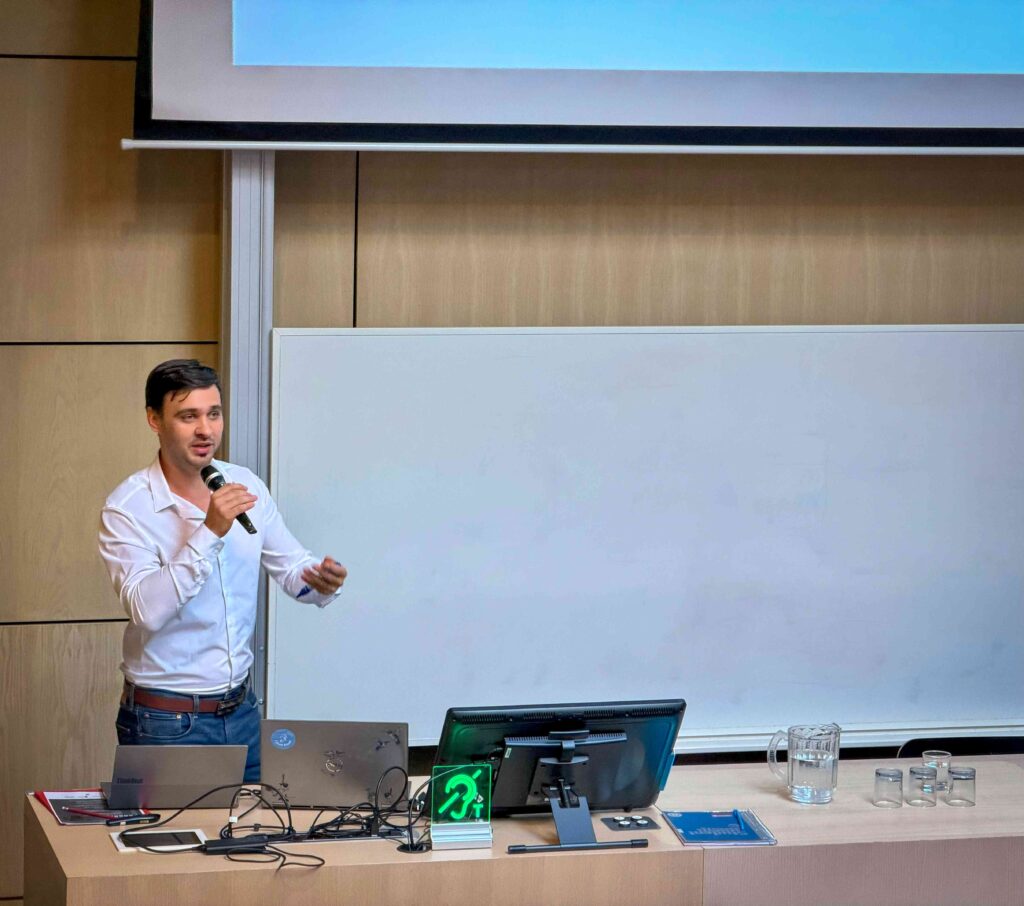
Social media, the council, relationships or something for free. Such answers began flying through the audience when Ondřej Linhart from the Faculty of Economics at TUL launched a short workshop instead of a traditional lecture.
He introduced the ‘Business with a Soul’ project, which introduces social entrepreneurship to primary and secondary school pupils. After all, business doesn’t have to be focused solely on maximising profit. It can also tackle social or environmental problems.
The workshops utilise the principle of peer-to-peer education. University students, who are closer in age to the secondary school pupils, introduce them to the topic. Participants design their own social enterprises and look for ways to combine economic viability with social benefit.
The company isn’t interested in your algorithm. It wants to know how much you’ll save it
A researcher spends several years developing a technology and eventually approaches a company. But instead of asking for technical details, the company asks: How much does it cost? Does it work? And what’s in it for us?
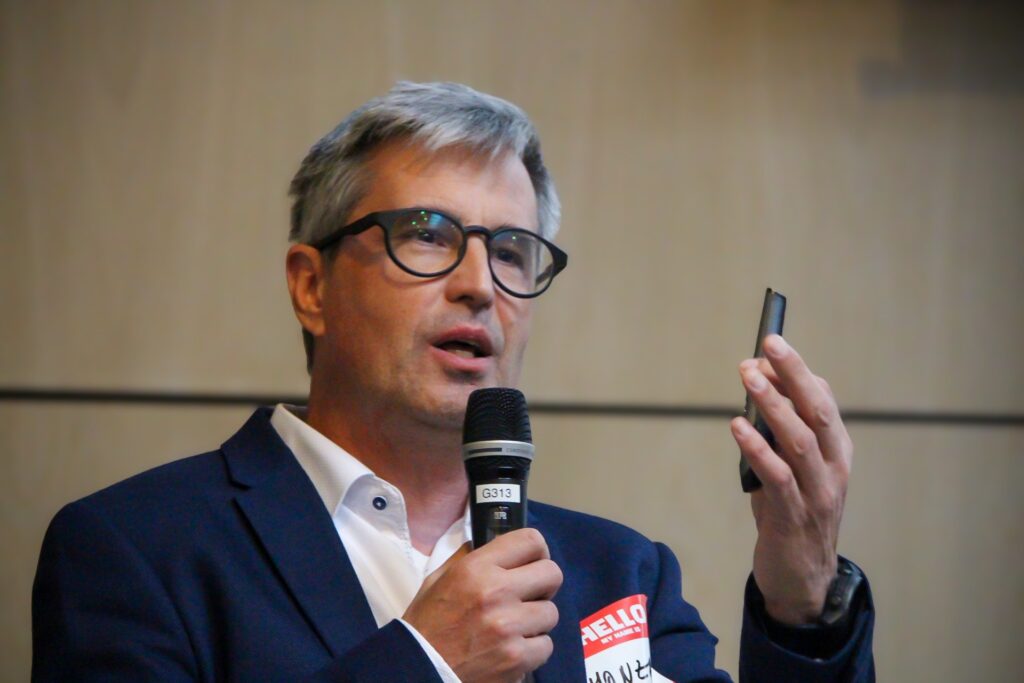
It is precisely this difference between academic and entrepreneurial thinking that Jan Kočí from CXI TUL described.
Using the example of a collaboration with a company specialising in wastewater treatment technologies, he demonstrated that successfully translating research into practice requires much more than high-quality technology.
“The method isn’t important; the technology isn’t important. What matters is what the company needs to solve,” he summarised.
Moreover, the language of communication changes with each stage of the collaboration. Operational requirements, economic considerations and the specific conditions for implementing the technology gradually come to the fore.
After all, cutting-edge technology may remain in the laboratory simply because its developer and the potential customer speak different languages.
What can scientists learn from artists?
Eduard Seibert from the Faculty of Art and Architecture at TUL presented his research at the intersection of art, design, architecture and beekeeping. For example, he developed a process in which bees use propolis to create images directly on canvas, and experimented with their ability to build a lamp structure from black wax. He also designs ‘apidoms’ – small structures linked to beekeeping.
However, his talk was not just about bees. It also raised the question of what scientists can learn from artists when it comes to communicating their own work. Whilst a scientist can achieve success through specialist publications without presenting their research to the public in any significant way, an artist must exhibit, present and defend their work before an audience. “If you, as an artist, don’t exhibit your work, you’re not doing your job,” Seibert pointed out.
According to Seibert, it is precisely this ability to captivate an audience, work with visual language and present one’s own ideas clearly that could serve as inspiration for the scientific community too.
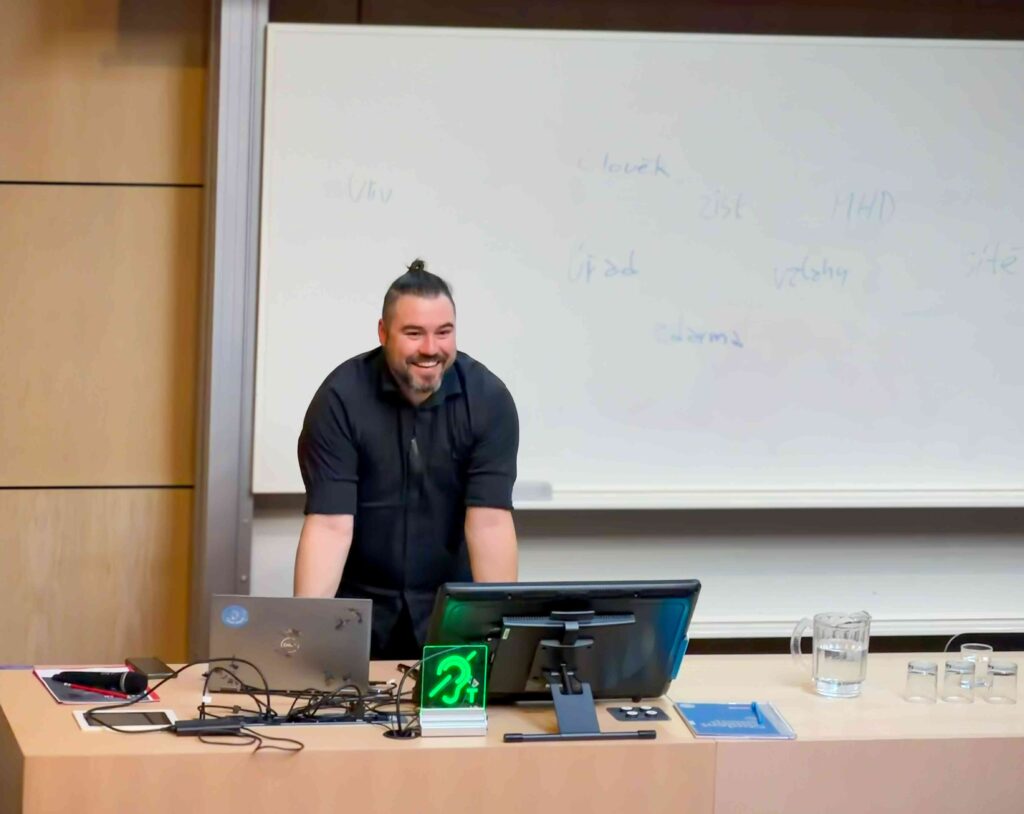
From enthusiasm to burnout. What can be done about it?
The conclusion focused on a topic of particular relevance to those who work professionally in science communication.
Tereza Mašínová, co-founder of SciComHub and press spokesperson for the Institute of Organic Chemistry and Biochemistry of the Czech Academy of Sciences, titled her talk ‘Between Enthusiasm and Burnout: How to Advance Science Communication in the Czech Republic’.
“I myself have often wavered between enthusiasm and burnout. Right now, I’m in the enthusiasm phase,” she admitted.
According to Mašínová, Czech science communication has become significantly more professional over the last decade. The activities of enthusiasts are giving rise to specialised teams, educational programmes and professional communities. However, the enthusiasm of individuals has its limits.
“If we want to develop further in any way, we need to start pushing for this from the top as well,” she pointed out.
She highlighted the recognition of science communication as a professional discipline, appropriate working and financial conditions, and systematic training as essential. According to Mašínová, there is also a need to change perceptions of the work of PR specialists, who are often viewed within institutions as people onto whom practically any task can be offloaded.
In her view, science communication is a distinct profession in its own right, with its own rules, requiring specialist knowledge, experience and the ability to navigate the scientific and media environments.
If science communication in the Czech Republic is to develop further, it cannot rely solely on the enthusiasm of individuals. It also needs the recognition and support of the institutions for which these people work.