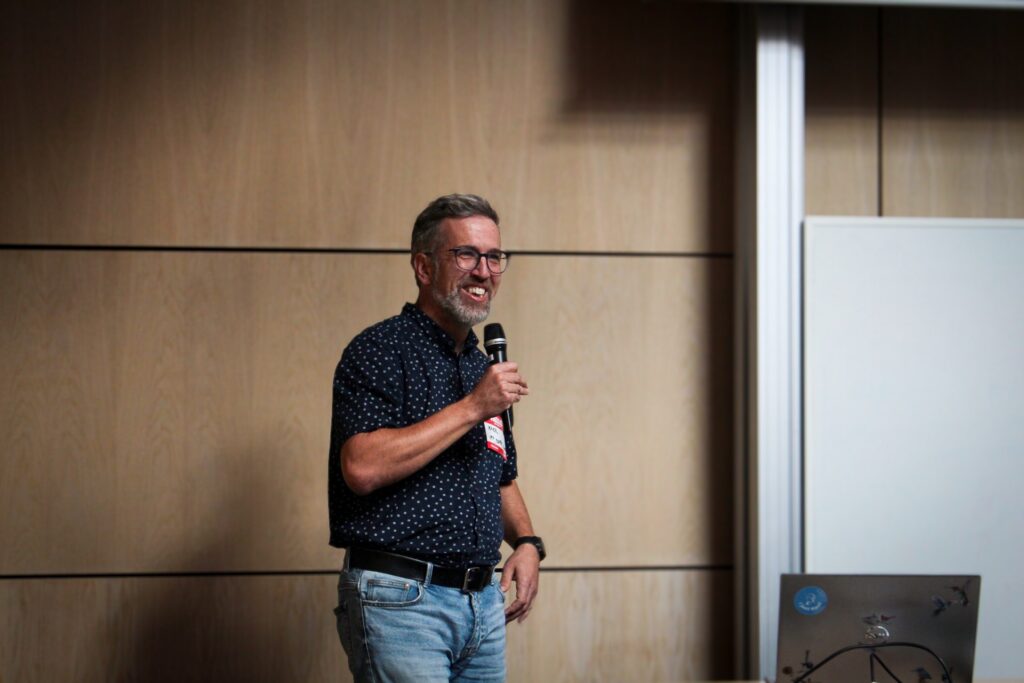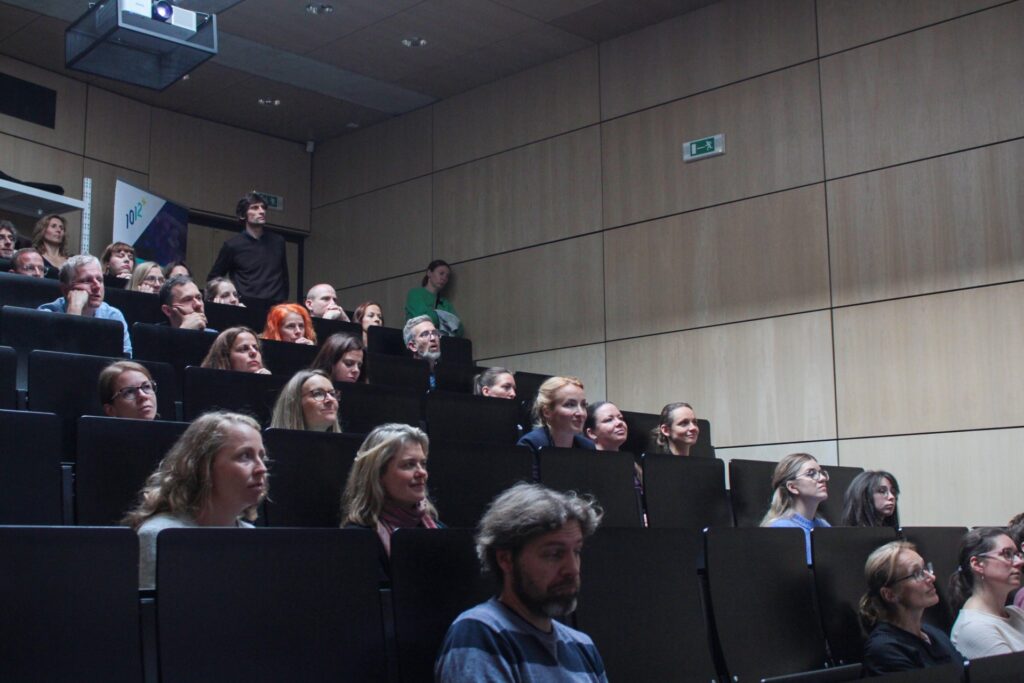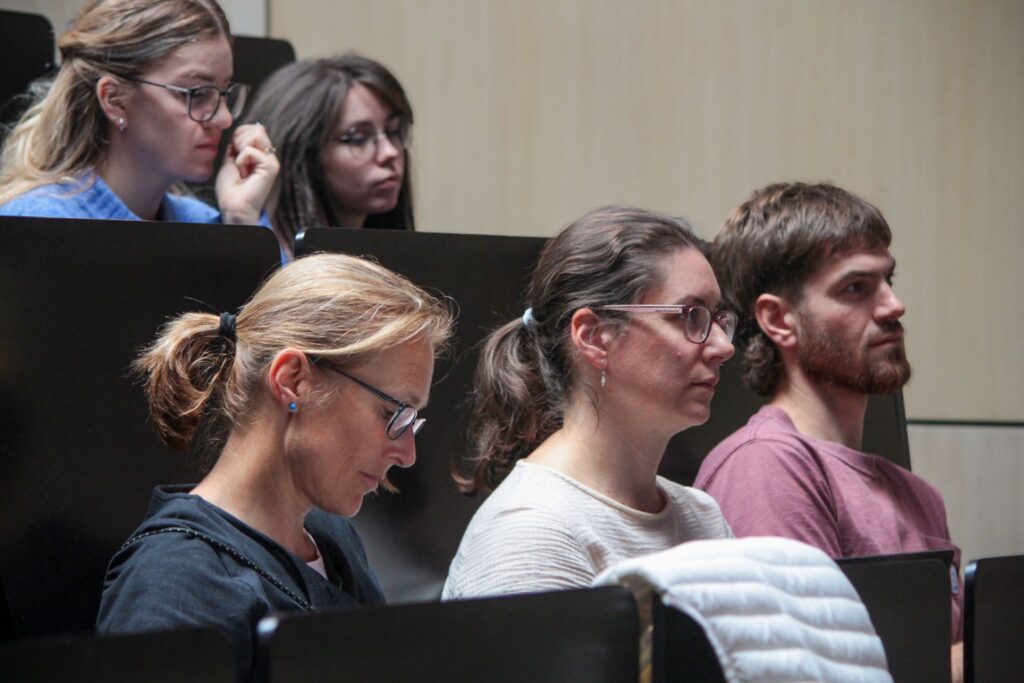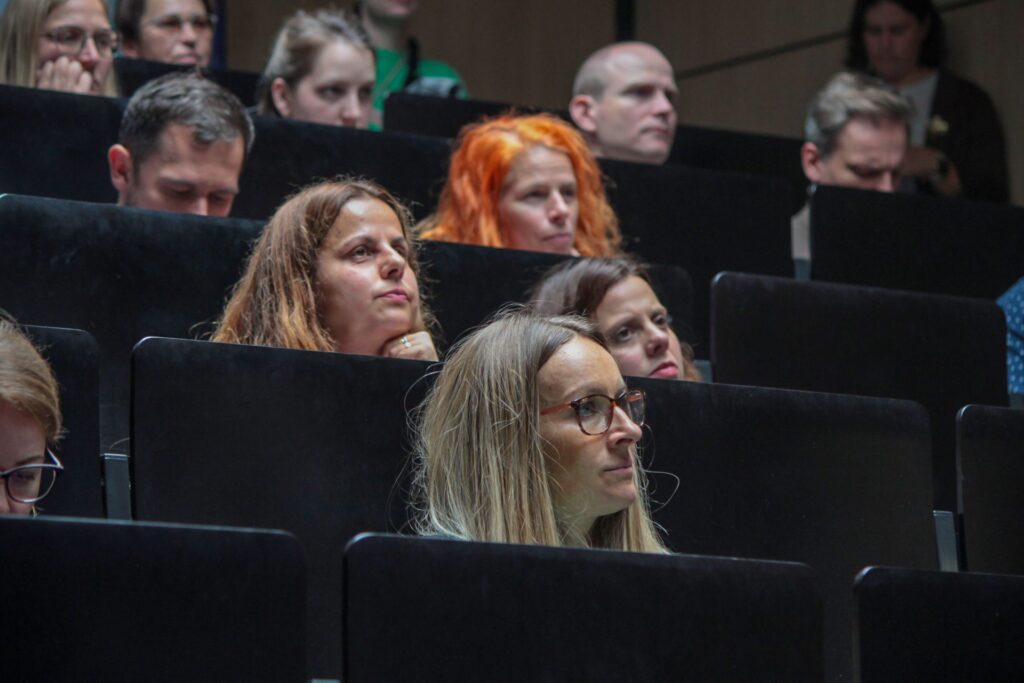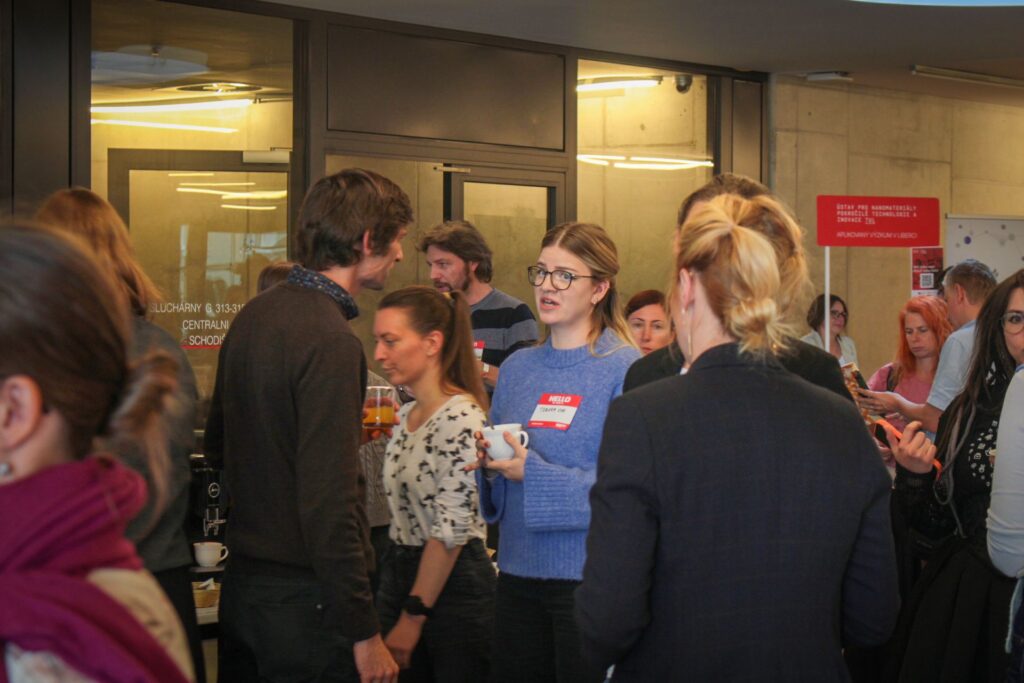
Scientists are capable of developing technologies for space missions, securing prestigious grants or searching for new treatments. However, explaining their own research to someone who has never heard of it can sometimes be harder than the research itself. How can we bring science out of the laboratories and into the public sphere? How can we engage an audience overwhelmed by information? And how can we discuss complex topics clearly, yet without distorting the facts? On 12 October 2026, two consecutive events at the Technical University of Liberec sought answers to these questions: the ‘Share Science!’ conference and the SciComHub platform’s NETconference.
The ‘Share Science!’ conference was organised by the Institute of Nanomaterials, Advanced Technologies and Innovation (CXI TUL) and supported by the Regional Development Agency in collaboration with the Liberec Region. This year’s event focused on research communication within regional institutions. Speakers from Liberec, Hradec Králové, Ústí nad Labem and Turnov shared their experiences with social media, popular science magazines, public events and building relationships with the local community.
Good science is not enough. Someone has to explain why it is important
“We now view the region as at least on a par with the European Union,” remarked Miroslav Černík, Director of CXI TUL, at the opening. He pointed out that an institution’s regional origins need not limit its ambitions or reach. And, above all, that scientific work does not end with the publication of a specialist article or the granting of a patent.
“Good science deserves not only to be published, but also to be understood and, above all, put to use,” he emphasised.
A scientist in front of the camera can be more effective than flawless graphics
The internet is full of videos that capture the attention of millions of people in a matter of seconds. Meanwhile, a scientific article may go unnoticed, even though it contains the results of several years’ research. What can be done about this?
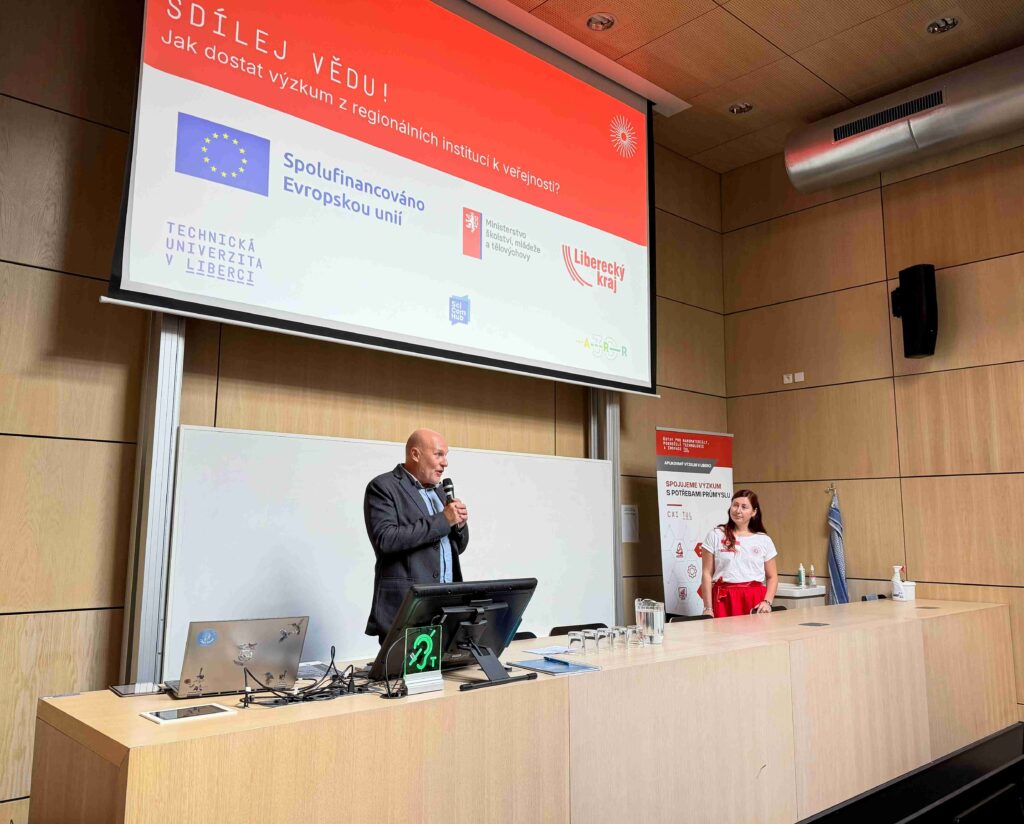
Ondřej Michal, head of the Communications and Marketing Department at the Technical University of Liberec, presented a practical guide on how to bring science into the digital sphere. He pointed out that every social media platform has a different audience and requires a different approach. It is therefore not enough simply to copy scientific content from a specialist journal onto Instagram or LinkedIn.
“You mustn’t simply recite the abstract of a scientific article. You must first highlight what you’ve discovered,” he explained.
It doesn’t necessarily take a visually perfect animation or a spectacular laboratory experiment to capture people’s attention. Simple videos in which a scientist speaks directly to the camera, explains their own research or shows what went wrong in the lab also work well. It is precisely these behind-the-scenes glimpses, authenticity and humour that can determine whether the audience forms a connection with the scientists.
A nine-page scientific article? Above all, the reader needs a single story
How can a scientific publication be turned into a text that even a secondary school pupil would willingly read?
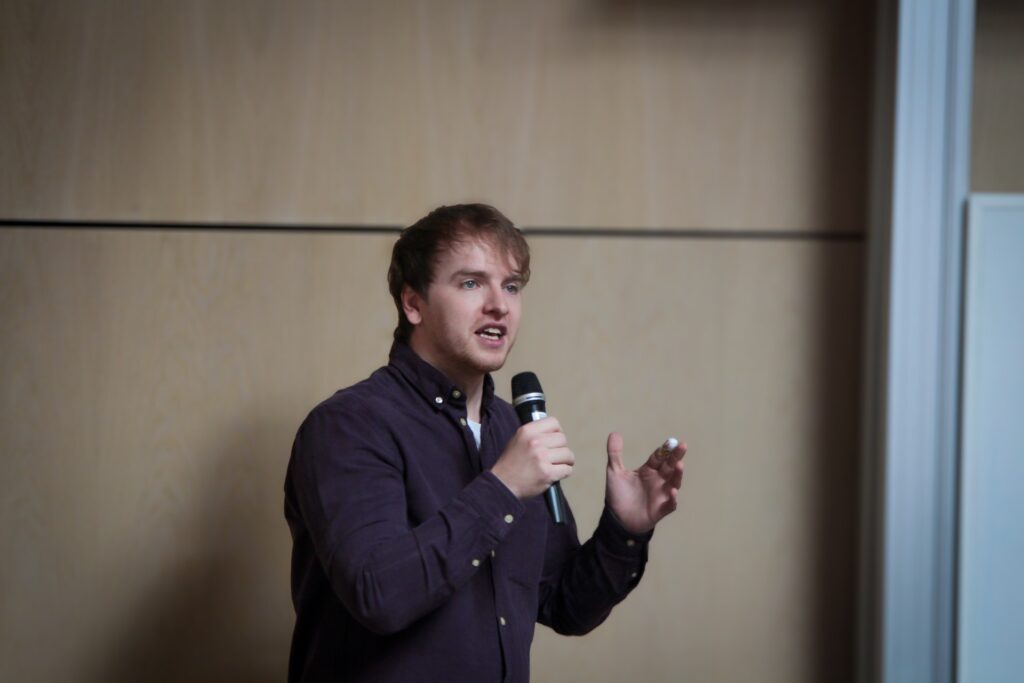
Lenka Manová from the University of Hradec Králové presented the magazine *Modern Science*, which brings the results of university research to people outside the academic sphere. It is based on a simple rule: don’t try to explain everything.
Using the example of chemical research into enzymes bound to magnetic particles, she demonstrated how a two-page story can be created from a specialist publication. A significant part of the text consists of an explanation of why the scientists addressed the problem in the first place and what their findings might be used for.
“Popularisation is not a shortened version of a publication,” she emphasised. “We’re really only interested in that one main idea, that main story.”
Collaboration with scientists is just as important. Manová admitted that she herself may not understand every scientific topic in detail. That is precisely why she first drafts an article and then has it checked by scientists. Experience shows that experts are often more willing to comment on a finished text than to write a popularisation article themselves from scratch.
A nine-page scientific article? Above all, the reader needs a single story
How can a scientific publication be turned into a text that even a secondary school pupil would willingly read?
Lenka Manová from the University of Hradec Králové presented the magazine *Modern Science*, which brings the results of university research to people outside the academic sphere. It is based on a simple rule: don’t try to explain everything.
Using the example of chemical research into enzymes bound to magnetic particles, she demonstrated how a two-page story can be created from a specialist publication. A significant part of the text consists of an explanation of why the scientists addressed the problem in the first place and what their findings might be used for.
“Popularisation is not a shortened version of a publication,” she emphasised. “We’re really only interested in that one main idea, that main story.”
Collaboration with scientists is just as important. Manová admitted that she herself may not understand every scientific topic in detail. That is precisely why she first drafts an article and then has it checked by scientists. Experience shows that experts are often more willing to comment on a finished text than to write a popularisation article themselves from scratch.
From space missions to the neighbours. How is science communicated in a small town?
Imagine a research centre that collaborates on space missions, develops cutting-edge optical systems and wins a prestigious European grant competition. Now imagine that a large proportion of the population of the town where it is based has no idea it even exists.
It was precisely this experience that Karel Žídek, from the TOPTEC centre at the Institute of Plasma Physics of the Czech Academy of Sciences in Turnov, brought with him to Liberec.
When he moved to this town of 15,000 people years ago and began telling people where he worked, he repeatedly heard the surprised reaction: “Do we actually have an Academy of Sciences here?”
Yet one of the centre’s buildings is just a few minutes’ walk from the town square.
Žídek therefore divided science communication into two areas, a concept he borrowed from physics: the near field and the far field. In the far field, a research centre in a small town can compete for attention with institutions from all over the world. On the internet, geographical location need not be a deciding factor.
In the near field, however, different rules apply. Local residents are often not interested in how many millions the centre has secured for research or in which prestigious journal it has published.
“When they come into the laboratory and build a telescope out of two lenses, look through it and find that it magnifies things, it’s much more beneficial for them,” explained Žídek, describing a simple experiment that can make a much greater impression on visitors than information about the ERC grant.