Magda Nechanická, a young researcher from CXI TUL, made it to the Czech finals of the prestigious international Falling Walls Lab competition. In her three-minute presentation, she introduced research that could significantly speed up the detection of pathogens in water.
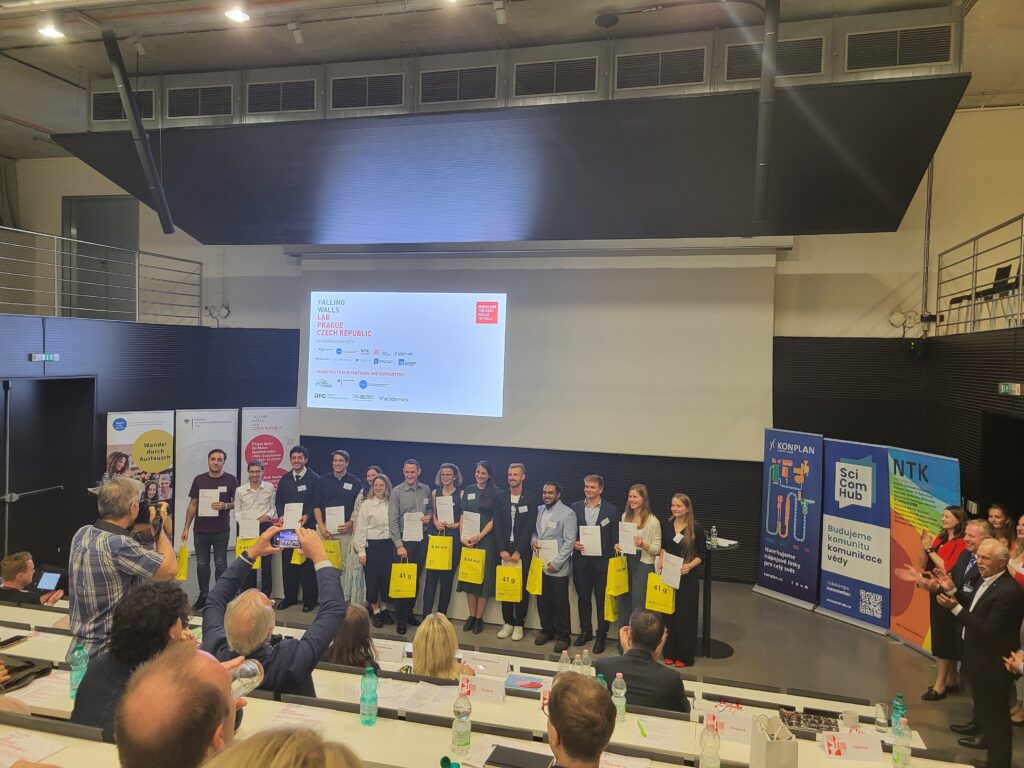
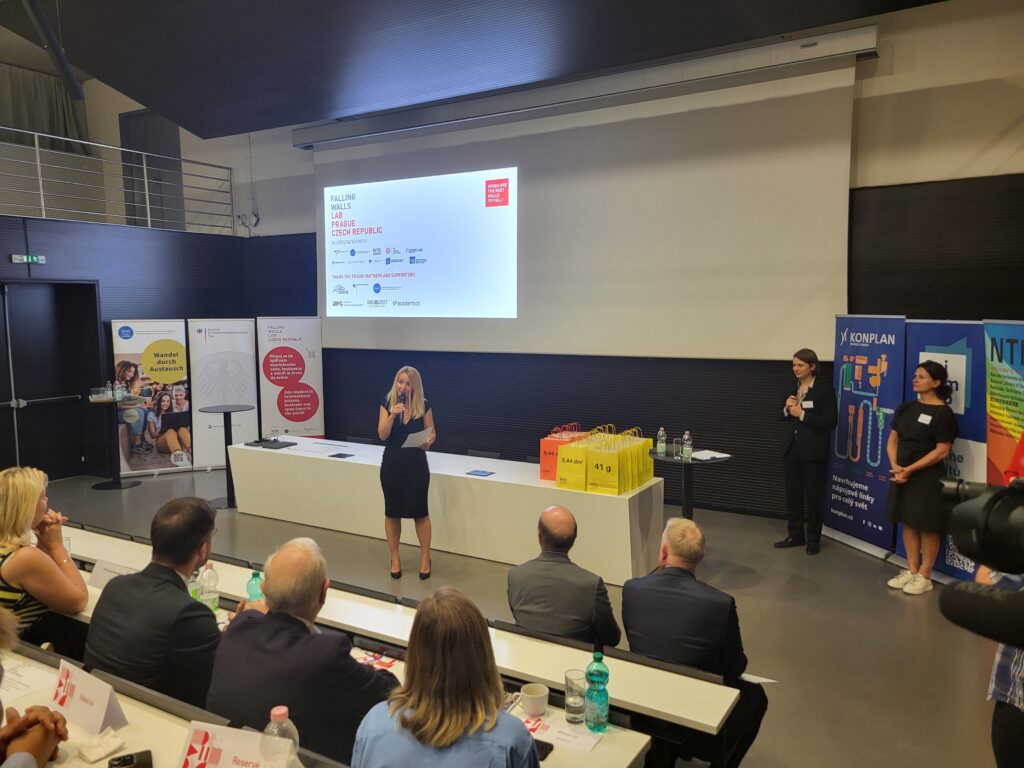
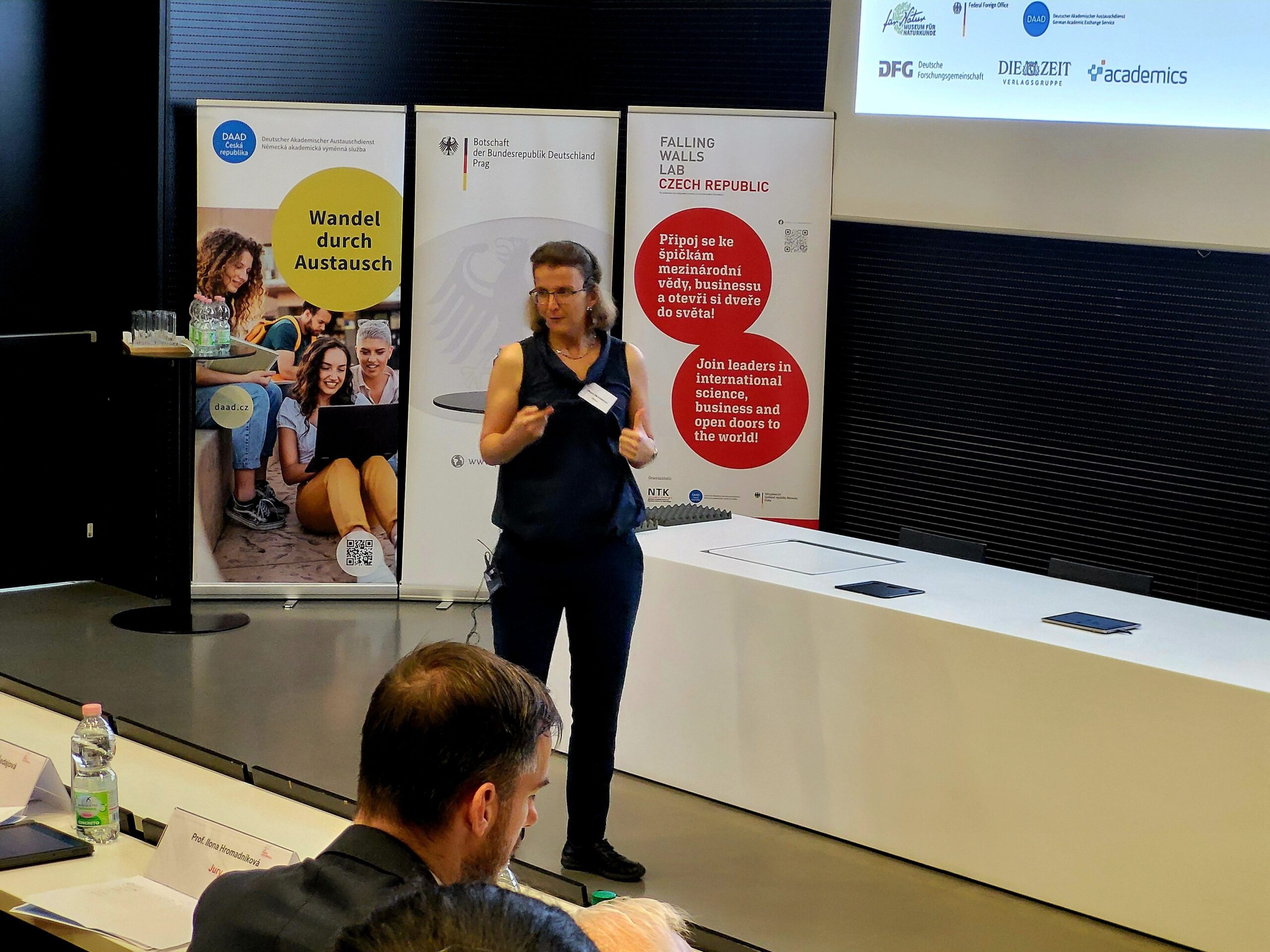
The Czech finals of the Falling Walls Lab took place on September 15 at the National Technical Library in Prague. Fourteen young scientists and innovators presented their research, technology, or ideas—each with the potential to “break down walls” and provide solutions to significant contemporary problems—in just three minutes.
This year, CXI TUL was represented by Magda Nechanická from the Department of Environmental Technology, whose research focuses on the rapid detection of pathogenic microorganisms in water.
We can detect pathogens in water within a few hours
With traditional culture-based methods, it can take several days to obtain the results of a microbiological water analysis. However, Magda Nechanická has developed and validated a method that can significantly speed up detection—and she has also obtained accreditation for it.
The method, based on qPCR analysis, can detect and identify the DNA of pathogenic microorganisms within a few hours. This eliminates the need to wait for bacteria to form colonies on a Petri dish in the laboratory.
“We are able to obtain results within just a few hours of receiving the sample. This allows water system operators to respond almost immediately—for example, to adjust operations, perform disinfection, or restrict water use before the problem spreads,” explains Magda Nechanická.
Analysis Available at CXI TUL
Speed can be crucial, especially when detecting microorganisms that pose a health risk, such as Escherichia coli or Legionella pneumophila. Furthermore, the method allows for the detection of pathogens even within biofilms, thereby providing more accurate information about the condition of the water system.
The methodology was developed with support from the TA ČR SIGMA program and was geared toward practical application from the outset. The goal was to bring the method to official accreditation and enable its use in laboratory practice; CXI TUL now offers qPCR analysis for the rapid detection of pathogens in water and biofilms.
It was precisely this connection between research and concrete practical application that Magda Nechanická also highlighted in her three-minute presentation at the Falling Walls Lab.
Three Minutes to Summarize Several Years of Research
Falling Walls Lab is a competition for young scientists and innovators who have three minutes to convince the jury and the audience of the significance of their research. It is not just about the scientific result itself, but also about the ability to explain its significance in a way that is understandable to people outside one’s own field.
For Magda Nechanická, participating in the Czech finals was an opportunity to present the CXI TUL research to a panel of experts and the public, while also gaining experience in presenting science in a truly condensed format.
A total of 14 finalists made it to this year’s Czech finals. The winner was Marie Vestenická, who will represent the Czech Republic at the Falling Walls international finals in Berlin.
Last year’s Falling Walls Lab final brought CXI TUL two successes. Pavlína Konopáčová came third and Karolína Morávková won the Women Innovators award. It was Karolína who returned to the competition this year in a new role – as last year’s award winner, she presented the Women Innovators prize to this year’s winner.
Congratulations to Magda Nechanická on advancing to the Czech finals, and thank you for representing CXI TUL so well!