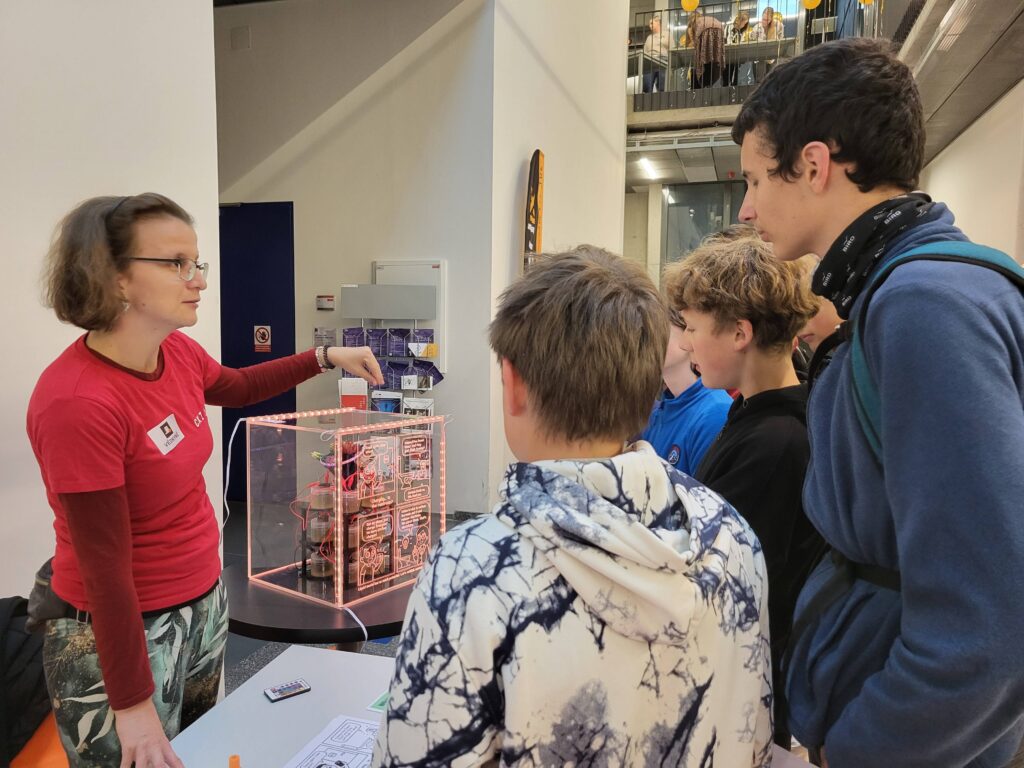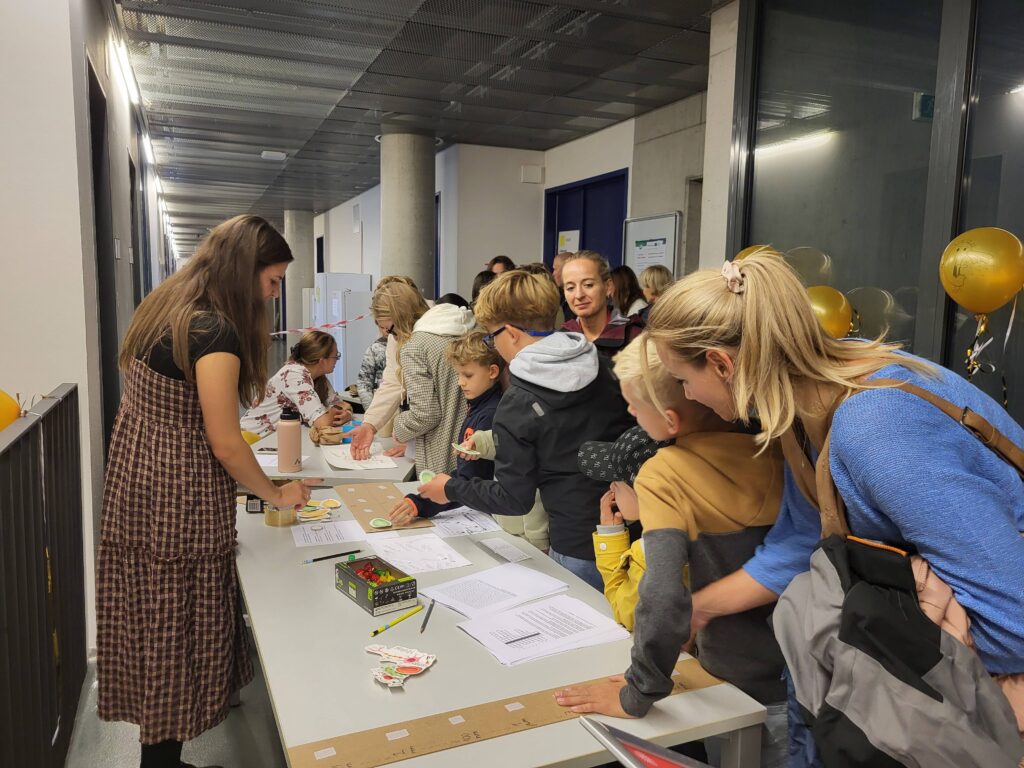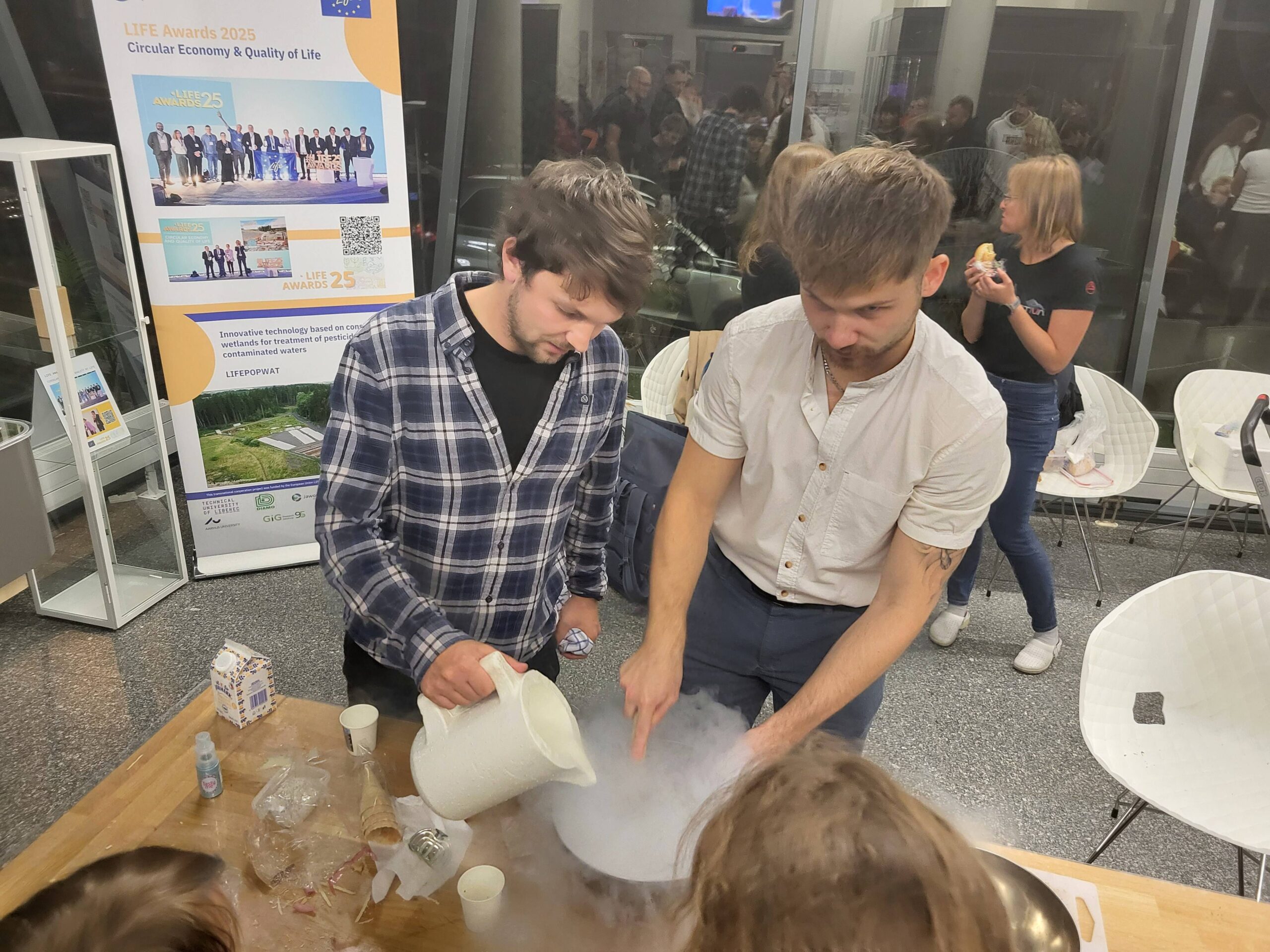
Bacteria can coordinate their actions. Human cells have their own communication network. Chemical substances send signals, and a 3D printer must correctly interpret the code. In short, communication neither begins nor ends with humans. At this year’s Science Night at CXI TUL, you’ll discover how many different “conversations” are taking place around us without us even hearing them.
When we hear the word “communication,” most of us picture a conversation, a phone call, a text message, or social media. But researchers take a much broader view.
Molecules, bacteria, and cells pass information to one another. Machines and computer systems communicate with each other. And sometimes all it takes is a change in color, a tiny chemical signal, or a gesture in front of a camera to set something in motion.
It is precisely these various forms of communication that will tie together this year’s Science Night program at CXI TUL.
Bacteria Don’t Need to Hear Each Other
Perhaps the biggest surprise? Bacteria are definitely not lonely microscopic creatures.
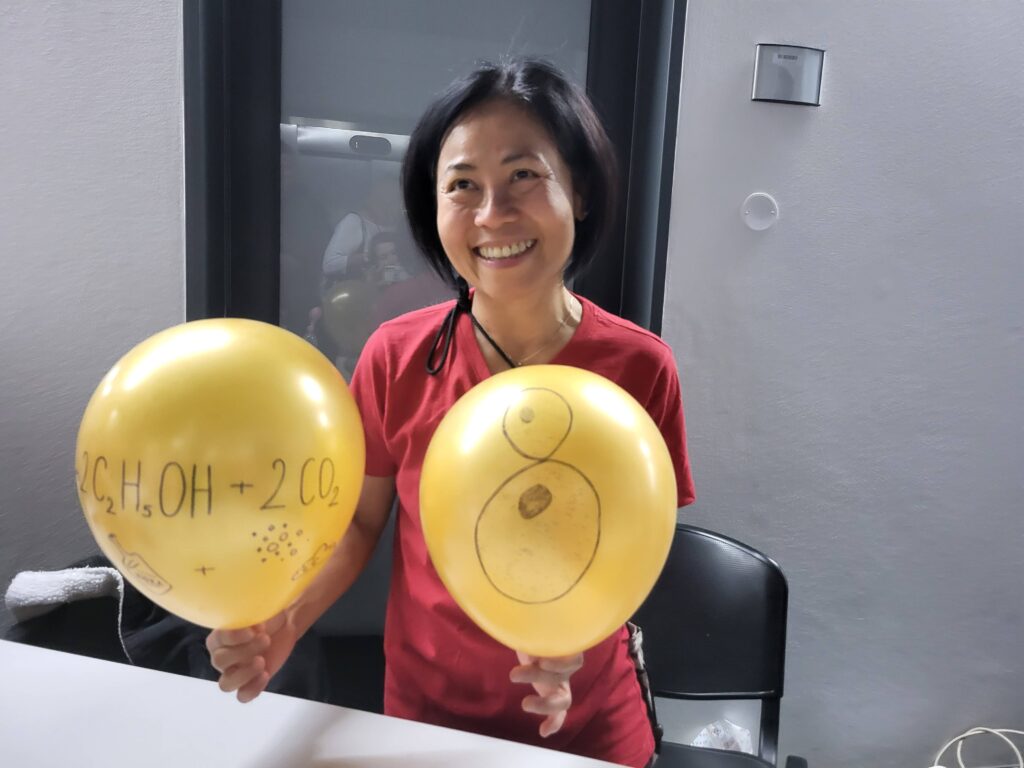
Using chemical signals, they can determine how many of them are nearby and adjust their behavior accordingly. Visitors can experience this principle, known as quorum sensing, at a station dedicated to bacterial communication in mine water.
And bacteria have one more trick up their sleeves: passing on genetic information.
At the “Microbial Rafting” exhibit, we’ll look at something that starts quite inconspicuously: doing laundry. Tiny fibers can be released from textiles and end up in the aquatic environment. On their surface, a space is created for microorganisms and the exchange of genes, including those associated with antibiotic resistance.
An ordinary fiber can thus become a microscopic meeting place.
Chemistry also has its own language
Chemical substances don’t need a dictionary. All they need are electrons, photons, and the right reaction partner.
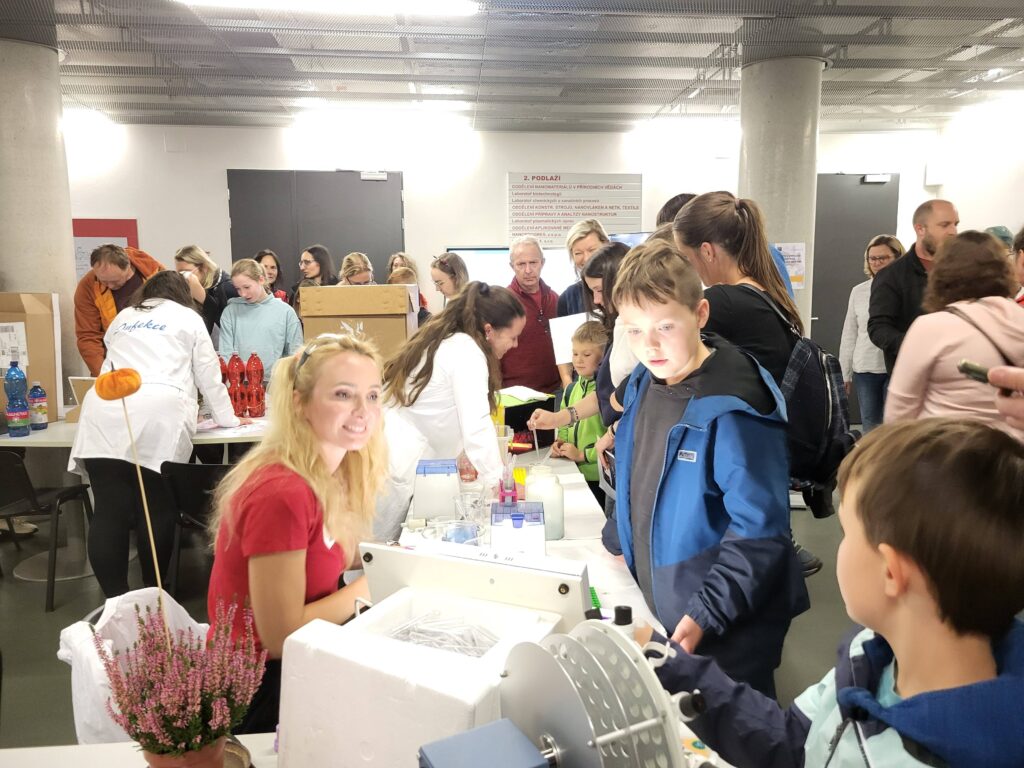
At the exhibit “How Does Chemistry Speak?”, you’ll see, for example, solutions that change color during a reaction, or the transfer of particles through mechanisms invisible to the naked eye.
Moreover, some substances are suspiciously straightforward when it comes to communicating information. Just look at them, and they immediately reveal what’s happening in the system.
Yes, even chemistry has its snitches.
Our bodies have their own network, too
The Internet is a relatively recent invention. But cells have been passing information to one another for millions of years.
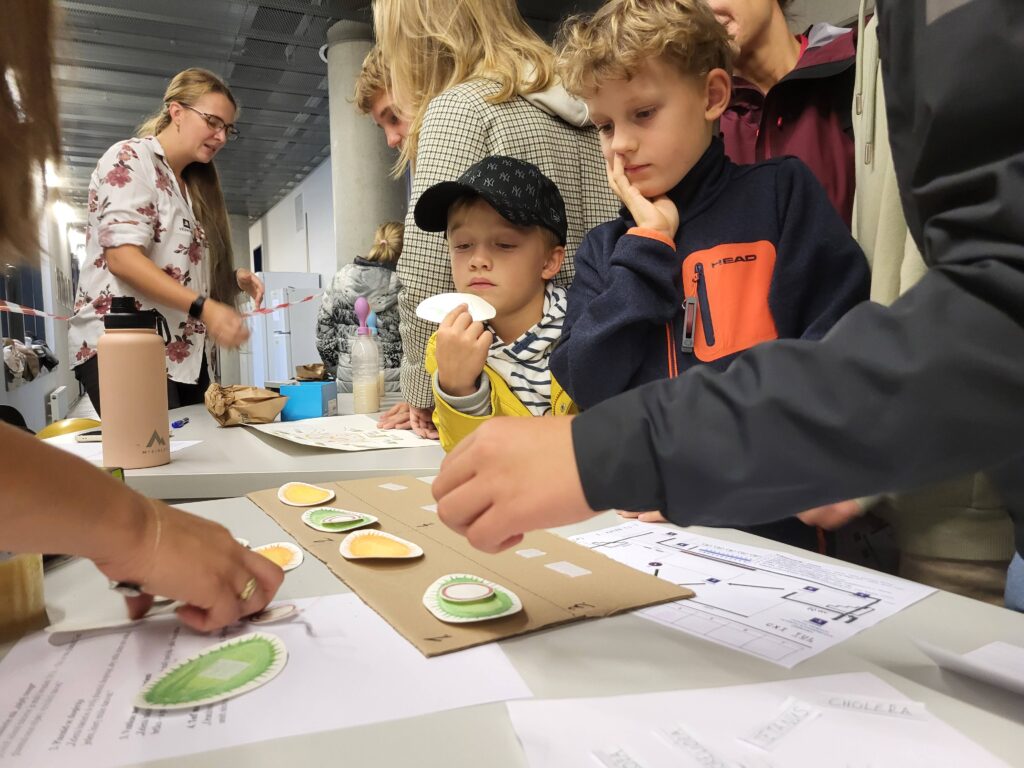
At the “Cell City and Its Communication Network” exhibit, visitors will gain insight into the system that allows individual parts of an organism to know what is happening around them and how they should respond.
Without such signals, cells would be unable to coordinate growth, defense, or the body’s normal functioning. What at first glance appears to be a chaotic microcosm is, in reality, an extraordinarily sophisticated information network.
And then there’s artificial intelligence
Can a computer recognize what you’re pointing at with your hand? And can you, in turn, tell who a chatbot is pretending to be?
In the CXI lobby, visitors will try out two interactive games featuring AI. In one, they’ll use gestures to communicate with a camera and immediately find out whether the system recognized them correctly. In the other, they’ll engage in a conversation with a chatbot and try to figure out which character it’s portraying.
Here, the question of communication is turned on its head: it’s not just about whether we understand technology, but also about how well technology understands us.
From Code to a Real Object
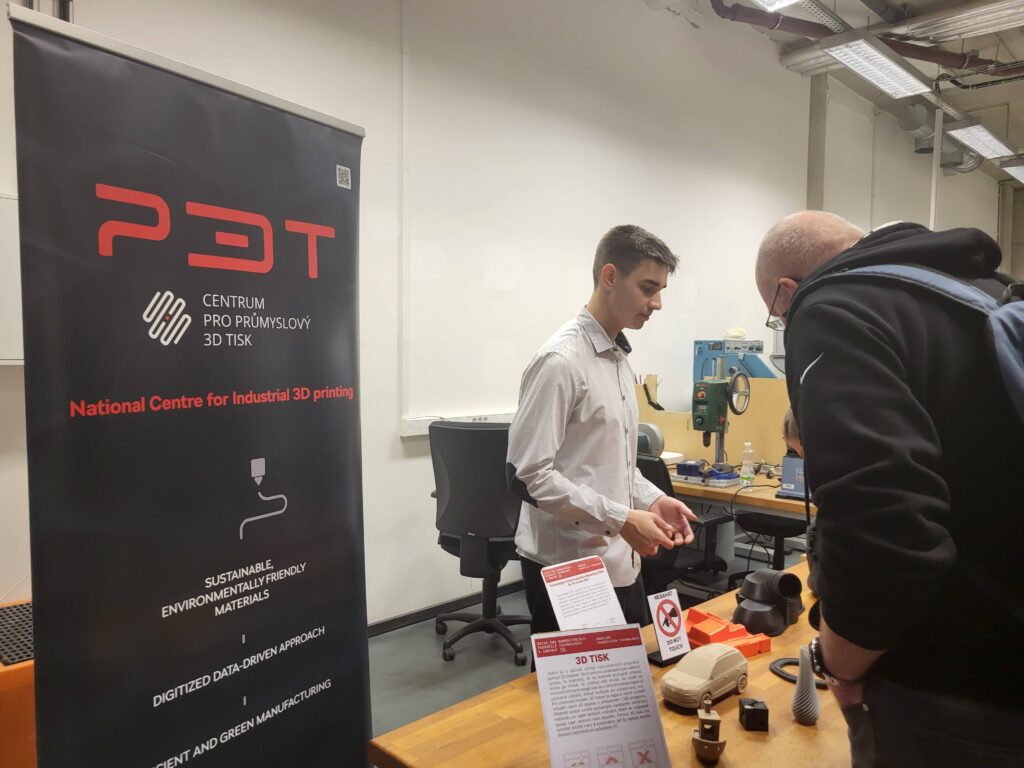
A different kind of dialogue takes place in 3D printing as well. A person creates a design, software converts it into instructions, and the printer must interpret them step by step.
A single error in any part of this chain is enough for the resulting object to look completely different from what the designer intended.
That’s why visitors to CXI will see not only finished products but also how digital information gradually transforms into a real object.
The microcosm sends messages. We just need to know how to read them
And finally, communication in which no message is actively transmitted.
Materials, in fact, store information about themselves. A surface, structure, or tiny particle can reveal to scientists what the material was made of, how it was stressed, or what happened to it in the past.
At the exhibit “What the Microworld Whispers to Us,” visitors will discover how scientists interpret such clues using microscopes.
Because sometimes there’s no need to say anything. All you have to do is look closely.
Science Night at CXI TUL will show that the world around us is full of communication that we don’t normally perceive. Molecules, bacteria, cells, artificial intelligence, and machines each use their own language. And for one evening, visitors will have the opportunity to peek into these conversations.
When and where: CXI TUL, Building L, 5:00 p.m.–10:00 p.m., with some stations open until 11:00 p.m.
For whom: children and adults
Come listen to a world that usually goes unheard.