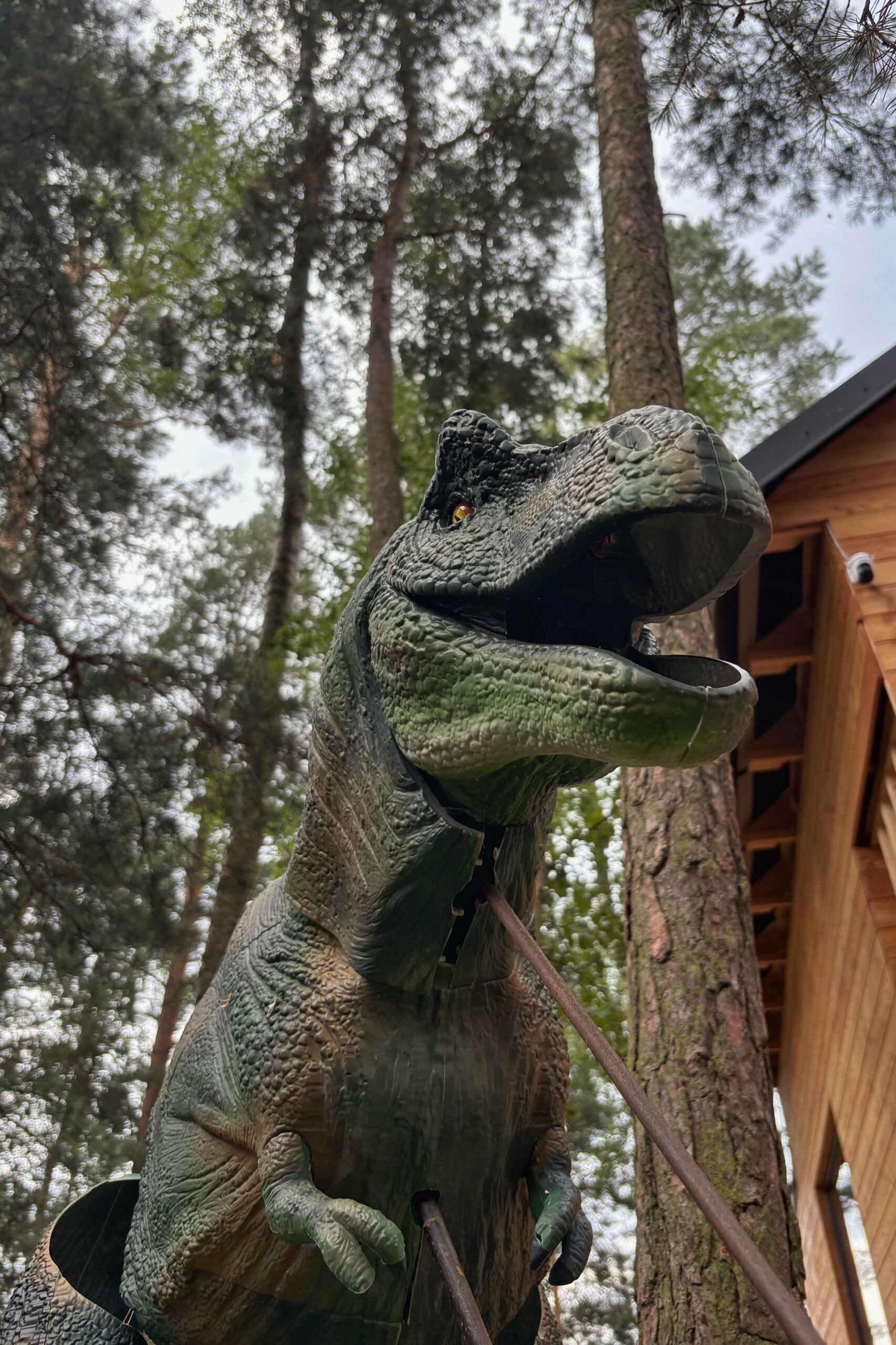
What began as a children’s game with dinosaurs is now the unique Dinopark Hostíkovice, home to nearly 150 prehistoric creatures. Its newest addition is a trilobite printed on a 3D printer in the CXI TUL laboratories.
Hostíkovice has just under fifty residents—that is, if you count only people. But if you include the dinosaurs, the population suddenly quadruples.
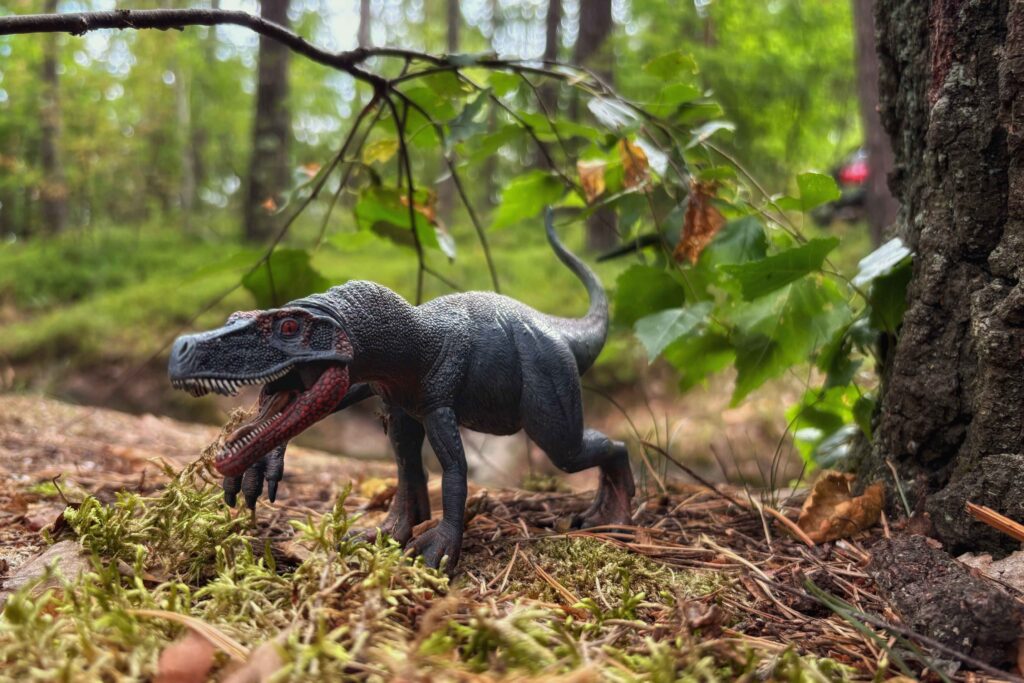
That’s because Dinopark Hostíkovice has sprung up in the middle of the forest. It wasn’t created as a business venture or a tourist attraction. It started as a children’s game played by two brothers. Today, visitors from all over the country come here.
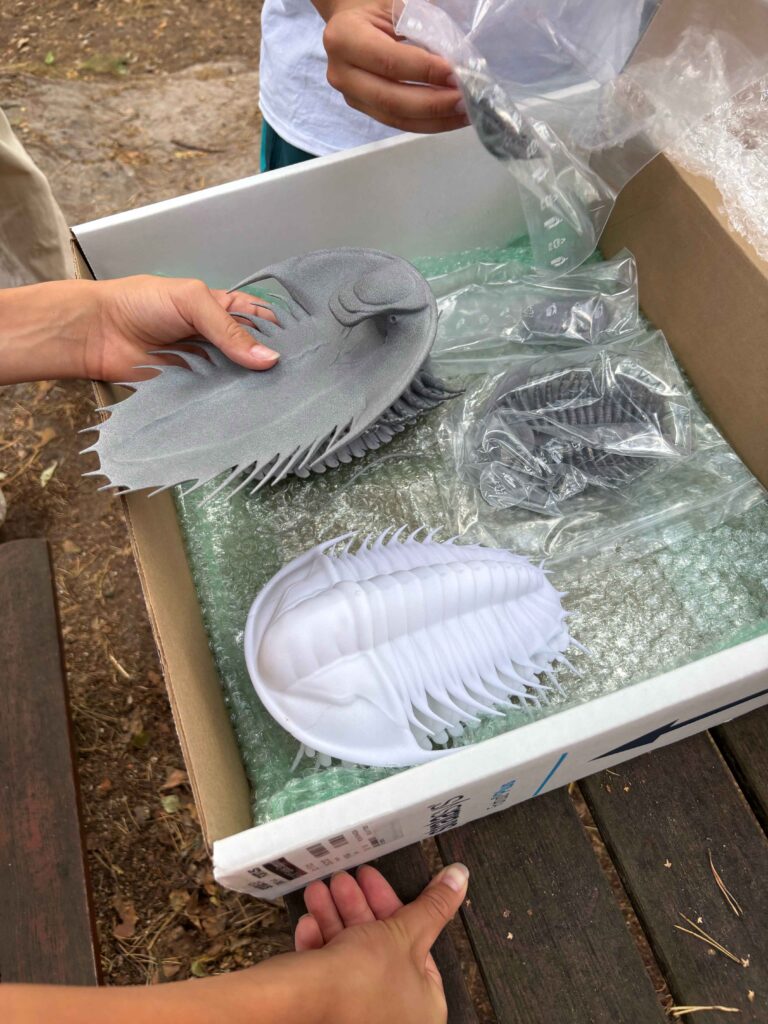
And recently, an unexpected resident joined the ranks: a trilobite printed on a 3D printer at CXI TUL.
The trilobite the park was missing
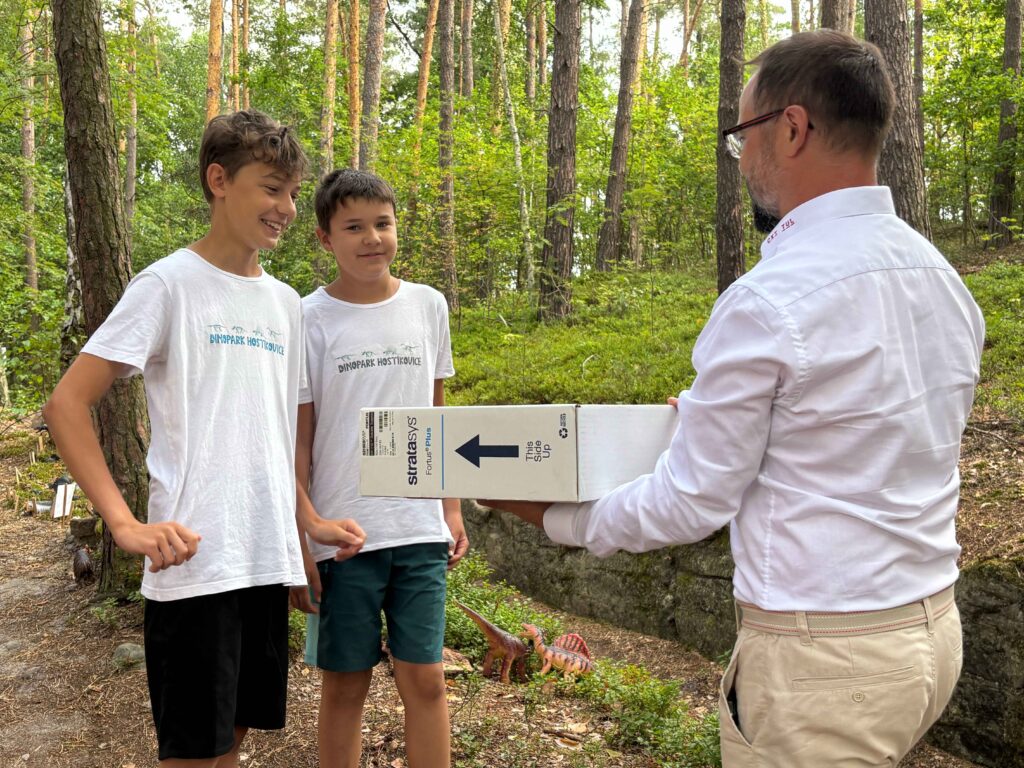
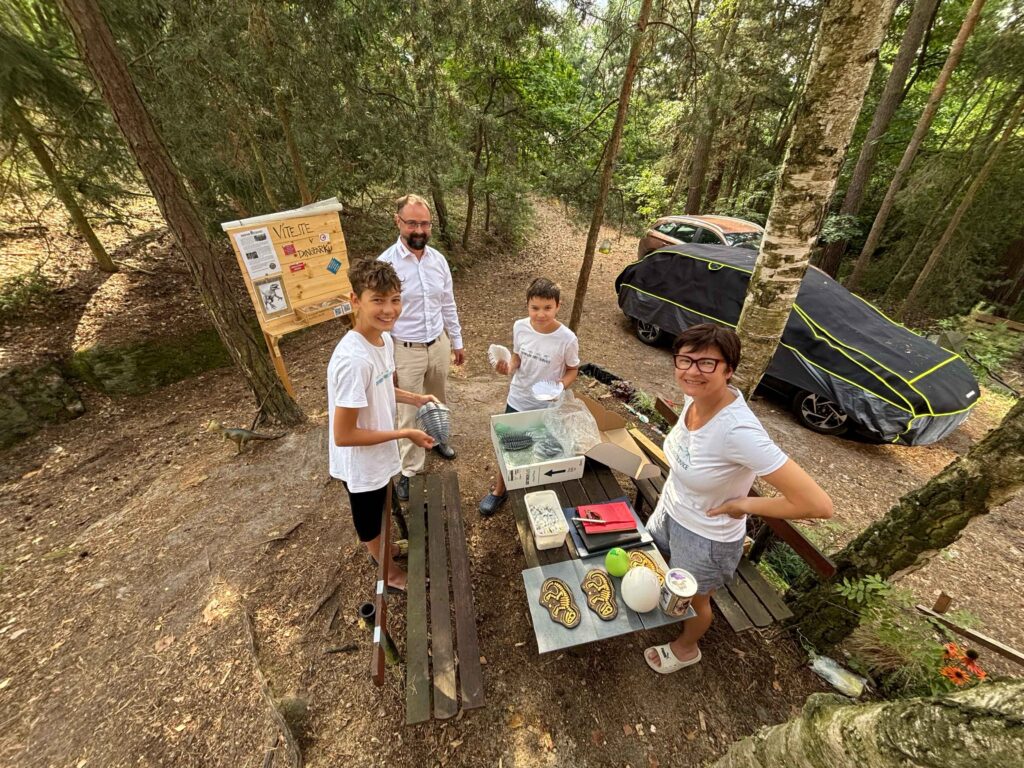
When 3D printing expert Pavel Francírek from CXI TUL stumbled upon a dinosaur park hidden among the trees during a family outing, he knew he’d be back soon. While touring the park, he noticed a small detail: among the dozens of dinosaurs, there was no trilobite. For most visitors, it was a minor detail; for him, it was a challenge he couldn’t ignore. A few weeks later, he was already on his way to Hostíkovice with several trilobite models of various sizes, printed right in the CXI TUL labs.
A Children’s Game Became an Attraction
But the park’s story began somewhere else entirely—and much earlier. Fourteen-year-old Vojta and his brother Pepa, who is four years younger, were just a few years old when dinosaurs captivated them so much that what started as boys’ play in the backyard turned into a real park with enclosures, shelters, and stone-paved paths. And behind it all is their mother, who revealed to us that she herself never really cared for dinosaurs.
“I always told myself, ‘Just don’t let me have a kid who likes dinosaurs, because I honestly hate them,’” she laughs. But fate had other plans, and today she’s one of the project’s biggest supporters. “As soon as Vojta started getting interested in animals, we discovered dinosaurs, and ever since then, his whole world has revolved around them. I gradually got drawn into it too, so I had no choice but to support him in it.”
It all started in a very classic way—with LEGO. Only later did the first plastic dinosaurs arrive, followed by a book full of information and LEGO dinosaurs, and the very first exhibition of figures in his grandmother’s garden in the Jeseníky Mountains. But Vojta himself soon discovered that neither books nor movies are always reliable sources: “I created my own document in Word, where I downloaded information from Wikipedia. I also have a book at home that I use to get the official dimensions and facts, which I then share with people during tours,” he says, describing his research system, thanks to which he now knows the story of every creature in the park by heart.
A Family Team That Sticks Together
Pepa is ten, and he and his brother divided up their roles almost instinctively. “My brother will do the talking, and I’ll make models and build dinosaurs so he can tell stories about them,” describes their division of labor with a smile. While Vojta mainly enjoys storytelling and working with people—he’s already the school’s emcee—Pepa sees himself in a different role: “I’d rather focus on dinosaurs,” he says, and it’s clear that figurines and models are his world.
The last member of the group is the boys’ dad, without whom the park wouldn’t be the same. He’s the one who brings 3D-printed models home from work for the kids. Thanks to him, the collection keeps growing. Today it includes 147 pieces and 43 species, and more are constantly being added.
As their mom says, it’s mainly about the joy of creating and the desire to keep improving things: “We always have something new to work on, and 3D printers are really helping us with that now.”
The boys’ enthusiasm shows no signs of waning. On the contrary, they’re thinking about how to incorporate other technologies into their project—such as creating QR codes that, when scanned, would offer visitors an audio recording when their live guides aren’t at home.
At CXI TUL, we’re glad we could be part of this story. After all, supporting innovation doesn’t always have to mean collaborating with large companies or industrial projects. Sometimes all it takes is two boys who love dinosaurs, parents who support them, and one trilobite printed on a 3D printer.